
If you see twelve kilometres on a map, you might expect a roughly two-hour walk. In these mountains, that same distance can stretch to an eight-hour day once you factor in vertical gain, a rocky descent that demands your full attention, and a stop at Rifugio Scotoni for apple strudel that you absolutely will not rush. The most common planning mistake is confusing trail time with actual moving hours with trip time, which includes lifts, bus transfers, and rifugio check-ins.
We’re based in the Dolomites and plan our itineraries alongside certified Italian Alpine Guides. If you want the full picture of how hiking here works, trail grades, gear, and route types — our complete Dolomites hiking guide is a good place to start. Below, we’ve framed realistic time expectations for everything from a two-hour lift-assisted viewpoint walk to the full Alta Via 2 traverse. By the end, you’ll know how to pick an itinerary length that suits your fitness and pace, and how to set daily expectations before you book a single hut.
Finding Your Range: Dolomites Hiking by Duration
The Dolomites aren’t one trail. Duration depends entirely on your objective, whether that’s a half-day loop above Cortina or a two-week traverse through wild, technical terrain. Here’s how the main options stack up:
- Day hikes: 2–8 hours on trail, plus 1–3 hours for lifts, parking shuttles, and transfers
- Short hut-to-hut circuits: 3–5 days, averaging 3–7 hours of hiking daily
- Week-long routes: 6–7 days, averaging 4–7 hours of hiking daily
- Alta Via 1: 8–10 days for the full 120-kilometre traverse
- Alta Via 2: 10–16 days, accounting for technical terrain and larger elevation totals
If you’re new to hut-to-hut hiking, 4–5 hours of moving time per day is a sensible starting point. Stronger hikers typically plan for 5–8 hours. Settling on a duration early matters – it determines rifugio availability and whether valley transfers are feasible between stages. Our self-guided hiking packages are designed around these realistic time bands, with rifugio bookings secured in advance so your pacing decisions don’t unravel on arrival.


The Reality Gap: Trail Signs vs. Your Actual Day
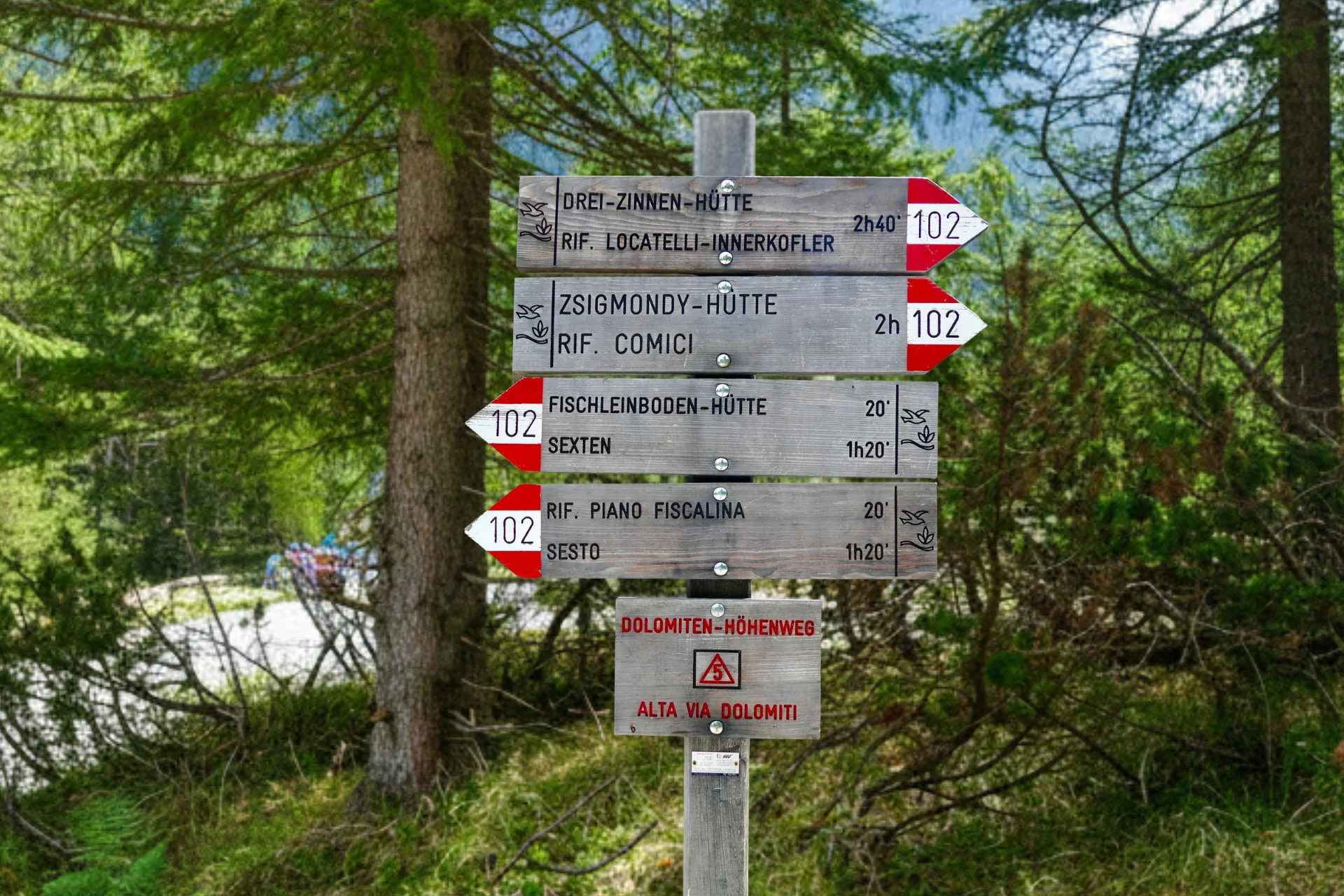
Official trail markers show moving time only. They don’t account for cable car queues at peak season (Seceda lifts base station on a Saturday in August is not a quick experience), parking, shuttles to trailheads, or the photo stops that quietly add 45 minutes to any hike.
Here’s a more honest way to think about daily effort:
- Lift-assisted viewpoints: 2–4 hours total walking
- Classic loops (Tre Cime, Cinque Torri): 3–6 hours
- Longer “earn-it” days: 6–8 hours
A few specific examples worth knowing:
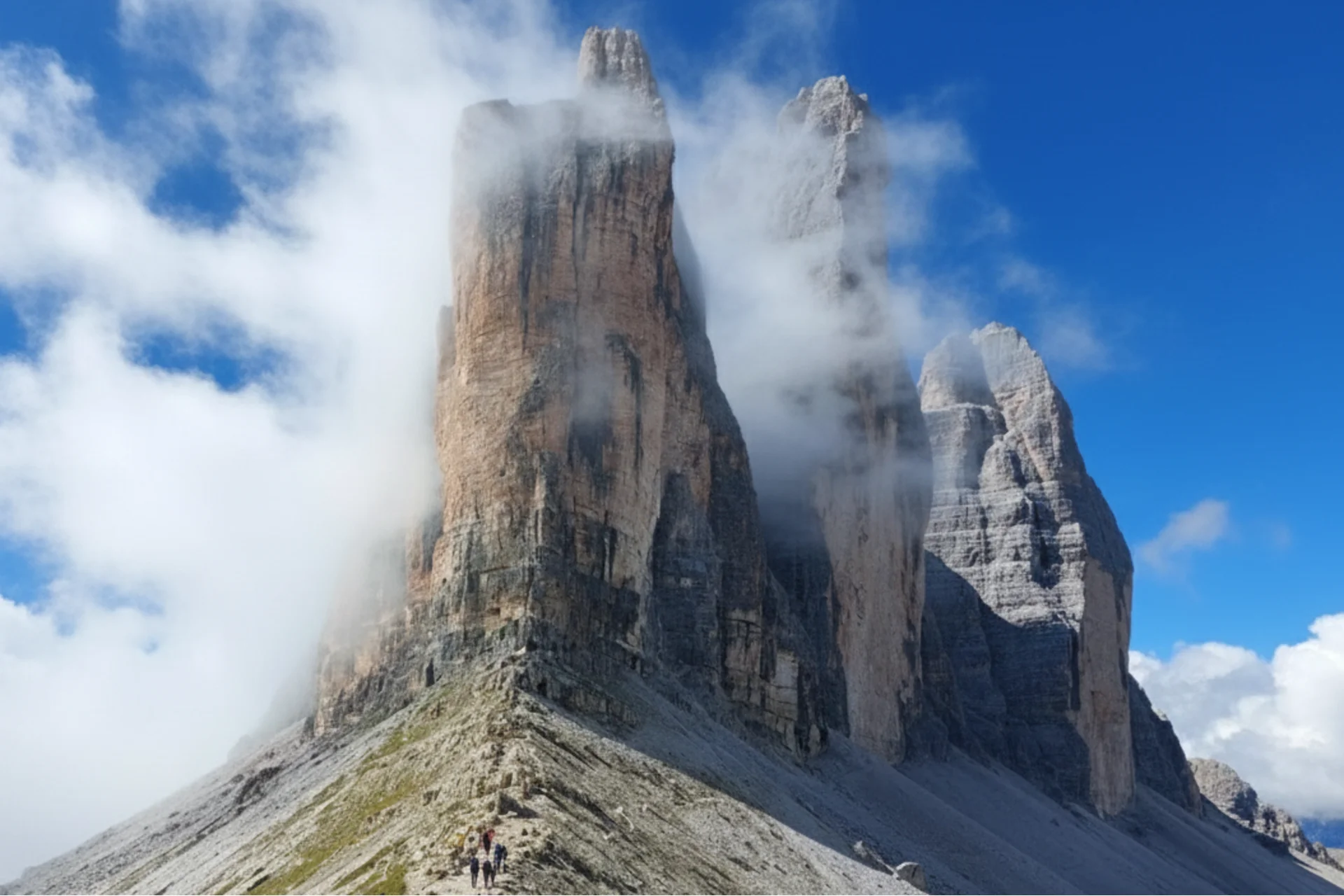
Tre Cime di Lavaredo loop: 2.5–5 hours of hiking (graded E by the Italian Alpine Club). Peak season parking requires advance reservations – add meaningful transit time to your morning. A Hiker’s Guide to the Tre Cime di Lavaredo Loop has everything from parking logistics to the best spots to stop on the circuit.
Seceda ridge: 2–4 hours. The cable car queue is often the real limiting factor, especially on clear weekends in peak season.
Lago di Sorapis: 5-6 hours return. Narrow, partially exposed sections regularly slow first-timers regardless of fitness.
Cinque Torri: 1–2 hours for the core loop; 2–4 hours if you add the WWI museum site and the rifugi nearby.
Pro Tip: Add 20–40% to any published trail time if photography is central to your day, and aim for a 7am start on popular routes in July and August. Crowds at Tre Cime can hit their peak as early as 10am.
Short Hut-to-Hut Circuits: 3–6 Days
A 3–5 day circuit is a genuinely satisfying way to experience alpine life without overcommitting. You’ll typically spend 2–4 nights in rifugi, covering 3–5 stages that often feel completely different from each other in terrain, elevation, and character. The complete rifugio guide covers the practical side before you commit: booking windows, room types, and what to expect at the hut dinner table.
Daily moving time for these circuits:
- Casual or first-time trekkers: 4–5 hours
- Fit, experienced hikers: 6–7 hours
These hours feel harder than they look on paper – you’re managing sustained elevation gain, rocky terrain underfoot, and pack weight. The Alpe di Siusi plateau and the Sesto Dolomites both offer excellent 3-4 day circuits with well-spaced rifugio stops and manageable daily stages.
If you want a ready-made route to work from, our 3-day hut-to-hut itinerary maps out a practical starting point.
One thing worth flagging: rifugio availability often drives your pacing as much as your fitness does. If your first-choice hut is full on a given night, you’re either walking a shorter or longer stage. As a guardrail, keep your longest day under 7 hours of moving time. You want to arrive at the hut with energy to eat well and actually enjoy where you are.


The 6-to-7 Day Sweet Spot
Six to seven days is when the Dolomites really open up. You could complete a substantial Alta Via section, or really see and explore Val di Fassa, enough to experience the rhythm of hut-to-hut life properly, without the coordination demands of a two-week traverse.
Daily on-trail hours:
- Comfortable pace: 4–6 hours, with 1–2 longer days built in
- Strong hikers: 6–8 hours, with early starts to beat afternoon weather
Two practical models work well here:
Model A (Hut-to-Hut): 5–6 hiking stages with one rest or buffer day. Build your entire schedule around whichever rifugio is hardest to book — Rifugio Lagazuoi on teh Alta Via and Rifugio Locatelli at Tre Cime di Lavaredo fill fast. Our Lake Sorapis & Tre Cime hut-to-hut itinerary is structured around exactly this approach — anchor huts secured first, stages built outward.
Model B (Hybrid): 2–3 days on a hut loop, combined with lift-access day hikes from a valley base. This works particularly well for groups with mixed fitness levels.


Alta Via 1 Pacing: How Many Days for the Classic Traverse?
Most hikers plan 7–10 days for the Alta Via 1. The route covers 120 kilometres, graded E to EE by the Italian Alpine Club; the distance is fixed, but your schedule reflects how you manage the mountain. For a full breakdown of what each pace actually feels like day to day, Alta Via 1 Duration: How Many Days Do You Really Need? goes into the detail that this section can’t.
The short version: a 9-day pace works well for most fit hikers. It allows relaxed mornings, a proper lunch at whichever rifugio you pass at midday, and a buffer if a pass is snowbound or a storm moves in faster than expected. Typical stage duration is 5–7 hours of moving time.
Two things shape your schedule more than raw speed. Rifugio dinner is strict; most serve between 7pm and 8pm and expect you to be seated by then. And high passes are best crossed in the morning; afternoon thunderstorms are common throughout July and August, often arriving by 2pm.
If you only have 4–5 days, hike a highlights section rather than rushing the full route.
Alta Via 2: Why Technical Terrain Changes Everything
I’ll be honest, the AV2 is underestimated. It’s not simply a longer version of AV1. The terrain is wilder, the route-finding is more demanding, and the via ferrata sections require you to clip on and move carefully through exposed passages.
Most hikers complete AV2 in 10–16 days, with 6–9 hours of moving time daily. If you haven’t used via ferrata equipment before, the clipping process on exposed sections will slow your pace noticeably during the first day or two.
Cumulative fatigue builds faster on AV2 for three reasons: larger elevation gains per stage, more technical terrain underfoot, and less margin for late starts, given the weather sensitivity at altitude. Build in at least one full rest day, ideally mid-route. Treat this as an expedition, not an extended day hike.
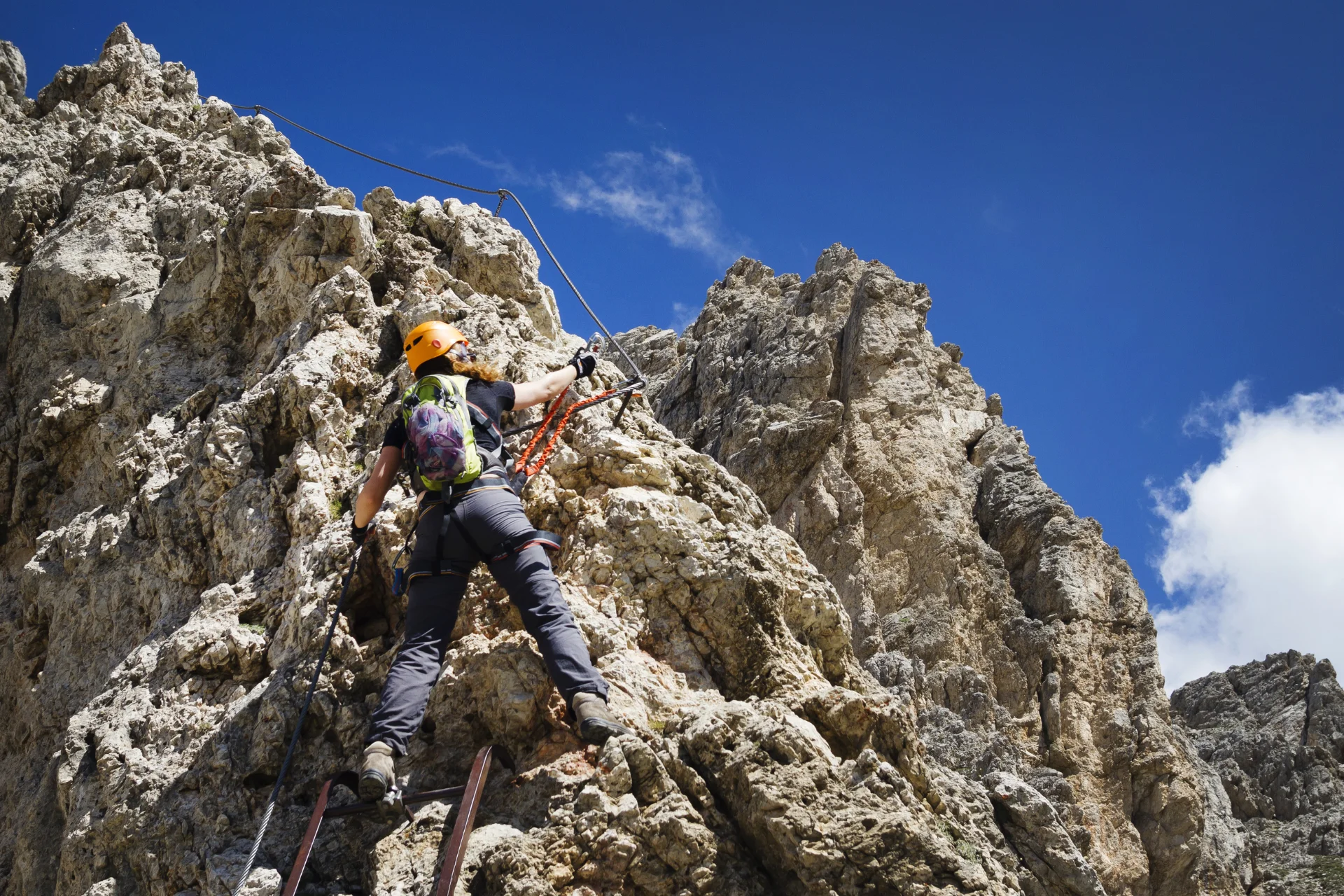
For hikers who want a via ferrata experience before committing to AV2’s full technical demands, our small group guided tours include certified guide support and via ferrata instruction across multi-day itineraries – a practical way to test your comfort on exposed terrain before you clip in solo.


How to Estimate Your Hiking Time: 5 Practical Steps
Step 1: Pick your daily moving-time band. Casual or first-time trekkers: 4–5 hours. Experienced hikers: 6–7 hours. Strong, fast hikers: 7–8+ hours.
Step 2: Adjust for elevation gain. Vertical gain dictates pace more than horizontal distance. Days with 700–1,200m of climbing slow most hikers significantly. If you’re uncertain, assume you’ll be slower on steep, rocky descents than on the ascent.
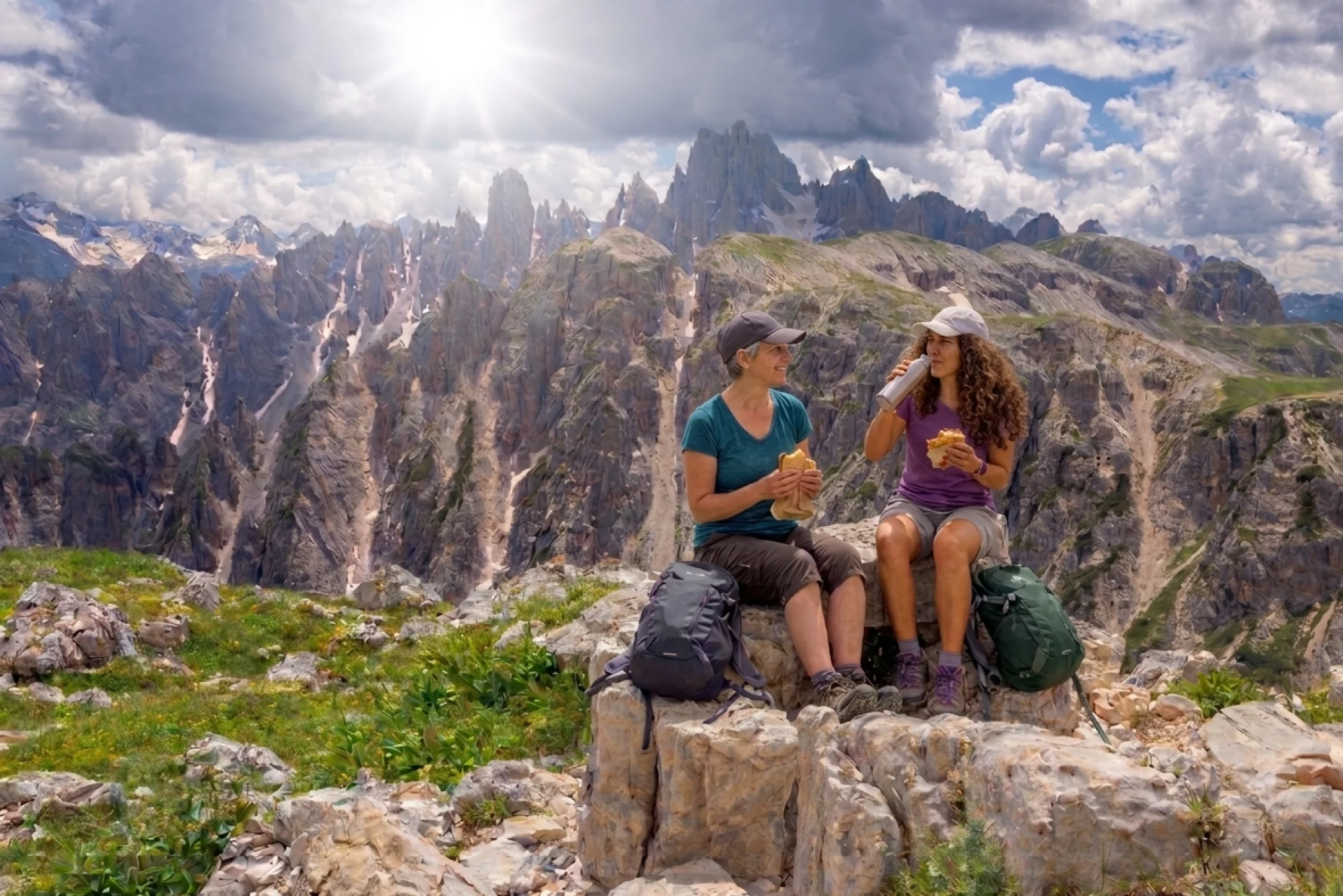
Step 3: Add time for breaks. Moving time isn’t total time. Add 30–90 minutes per day for water stops and rifugio lunches. On popular day hikes, add more for photography and crowd pinch-points at viewpoints.
Step 4: Factor in lifts and transport honestly. Cable cars save hours of climbing but introduce queue time in peak season. Check operating hours before you commit to a schedule – missing the last lift means an unplanned valley descent. The Dolomitibus summer timetable is worth bookmarking if you’re relying on bus shuttles to reach trailheads across the eastern Dolomites.
Step 5: Check the season and daylight. In early June and late September, shorter days and residual snow patches on high passes require more conservative planning. July and August offer stable trail conditions, but heat and foot traffic add their own friction.
 Self-Guided Tours
See You on the Trail
There’s no single answer to how long it takes to hike the Dolomites, and that’s actually good news. A two-hour lift-assisted viewpoint and a ten-day Alta Via traverse are both valid ways to experience these mountains. The difference is knowing which one suits your fitness, your time, and your pace before you book anything.
The hikers who enjoy this place most aren’t necessarily the fastest. They’re the ones who set realistic daily targets, start early enough to beat both the crowds and the afternoon weather, and arrive at the hut with enough energy to eat well and take it all in. That’s the whole game.
If you’d like help putting a specific route together, our self-guided packages handle the logistics so you can focus on the walking.

View Posts By Topic
FAQ
First-timers should plan for 4–5 hours of moving time per day. Classic Alta Via stages typically require 6–7 hours. Strong, experienced hikers often push into 8-hour days on longer combination stages – though that’s a full mountain day and you’ll feel it by dinner.
For a short loop or a focused set of day hikes, yes. For any meaningful traverse, no. Three days works well if you concentrate on a single mountain group – the Tre Cime area, the Alpe di Siusi plateau, or the Cinque Torri, rather than trying to cover ground across valleys.
For 3 hiking days, you should always allow 5 days – the first to arrive at your destination, allowing for delays getting there, time to prepare, and start first thing the next morning. Your final day of hiking will often finish in the afternoon, requiring a place to stay for the evening before you head to your next destination.
Sustained elevation gain and technical descents are the biggest pace-killers. Beyond the trail itself, afternoon thunderstorms – common by 2pm in July and August – regularly force hikers to adjust their day. Starting early and reaching your hut by early afternoon is the most practical habit you can build.
Yes, and it’s worth doing strategically if you need to do this. Lifts are excellent for bypassing long valley climbs and conserving energy for the terrain and views that actually matter. Just check operating hours carefully; seasonal schedules vary, and missing the last cable car of the afternoon creates a long, unplanned walk back down.
Five to six months ahead for July and August dates for the most popular routes. Start with the huts that are hardest to book, then fill in the rest of your stages around those anchor nights. Waiting until spring for a peak-summer booking often means compromising on your preferred route.
Our self-guided packages handle all rifugio reservations. If you’d rather not spend an afternoon navigating Italian booking systems, browse our hut-to-hut itineraries, and we’ll take that off your plate entirely.
The Italian Alpine Club grades trails from T (Tourist, easy paths) through E (Escursionisti, standard hiking) to EE (Escursionisti Esperti, demanding terrain) and EEA (via ferrata routes). Most Dolomites day hikes fall in the E range. Alta Via 1 sits at E to EE. Alta Via 2 crosses into EEA territory on its technical sections – that distinction matters if you’ve never used a harness and ferrata kit before.
If you’re starting from scratch on fitness and experience, our beginner’s hiking guide to the Dolomites covers which areas and trails suit first-timers specifically.
Not sure which grade suits your experience? WhatsApp us, and we’ll give you an honest read based on your fitness and hiking background.
More than most people expect, especially on steep descents. A 10kg pack feels manageable on flat ground and genuinely slows you on a 900m technical descent. On hut-to-hut routes, aim for 8-12kg packed, including water. Every kilogram above that adds meaningful time on the bigger elevation days.
The good news: rifugi (mountain huts) provide bedding, and breakfast is included with half-board, so you’re not carrying camping gear. A well-edited pack for a 5-day circuit fits comfortably into a 30–35 litre bag. Pack light on the first day – you’ll thank yourself on day three.
Late June through mid-September is the window. July and August give you the most reliable trail conditions, the widest rifugio opening period, and the longest daylight hours, but also the most foot traffic on popular routes like Tre Cime and the southern Alta Via 1 stages.
For the mountain with noticeably fewer people, late June and early September are worth considering. Snow clears from most high passes by late June, and September brings cooler temperatures and sharper visibility. The trade-off is a shorter booking window: some huts close by mid-September, so confirm dates before you commit to a route.
https://staging.dolomitesactivetours.com/best-time-to-visit-dolomites/