
Here’s a packing dilemma I hear constantly: you’re planning a two-week Italy trip, one suitcase, and somehow you need to dress for Rome’s 32°C midday heat AND the Dolomites’ alpine ridges where a storm can roll in before you’ve finished your lunch. Generic advice to “just bring layers” doesn’t cut it when the weather can swing from 25°C sunshine to 5°C with horizontal rain inside an hour.
So, what to wear hiking the Dolomites? Short answer: You don’t need a massive kit. You need a simple hiking outfit for summer that handles altitude, fits in a carry-on, and something that works at a rifugio dinner table. Having organised and done many hiking tours in these mountains, I’ve seen plenty of people suffer through spectacular viewpoints in soaked cotton shirts to know what actually works when the weather turns.
This guide covers the three-layer system, the footwear question I get asked more than any other, what to leave at the hotel, and a capsule approach that’ll keep your pack light without leaving you underprepared. For the full picture on planning your time in the mountains: trails, fitness, logistics — the Dolomites hiking guide is a good place to start.
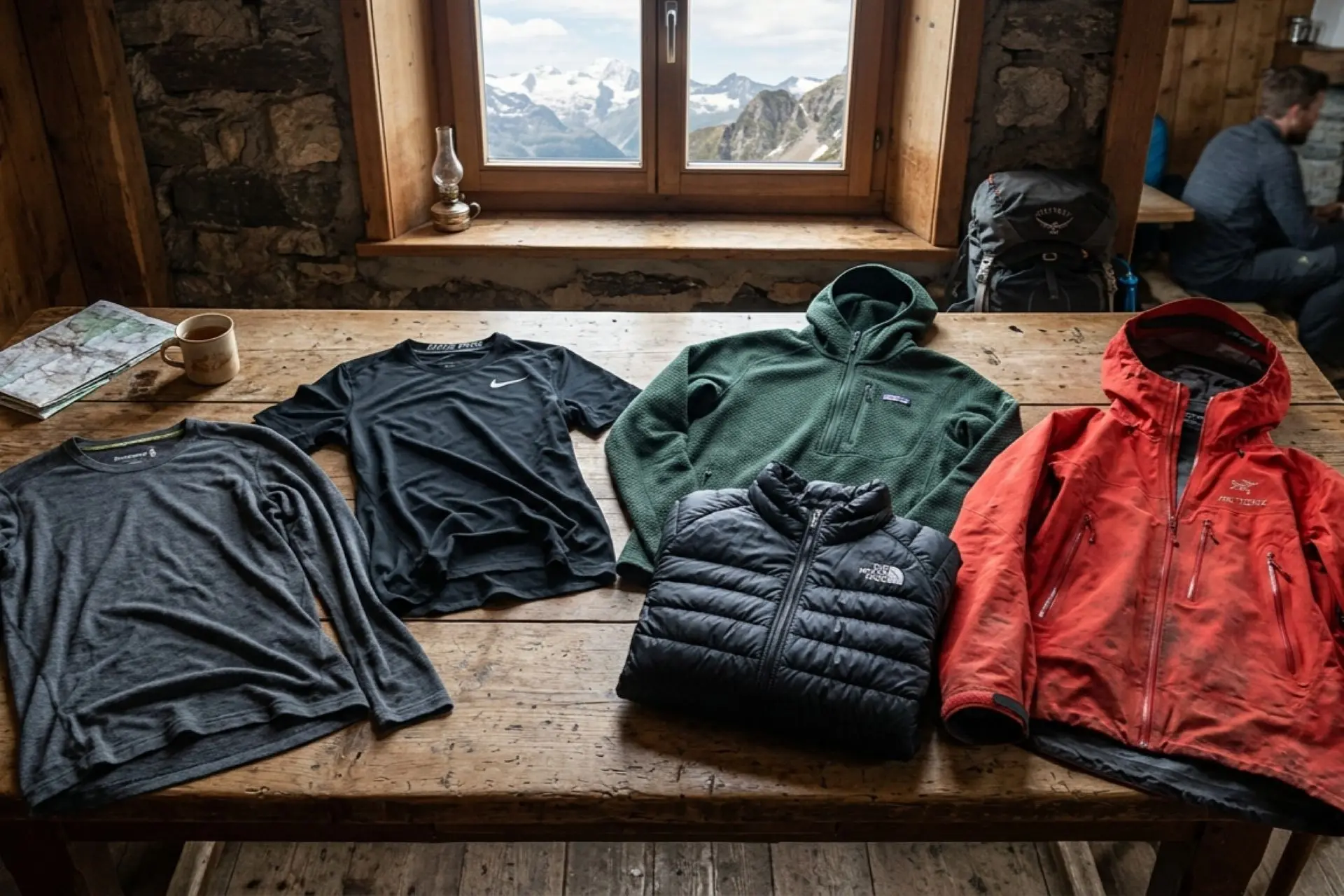
The Three-Layer System: Managing Temperature Shock
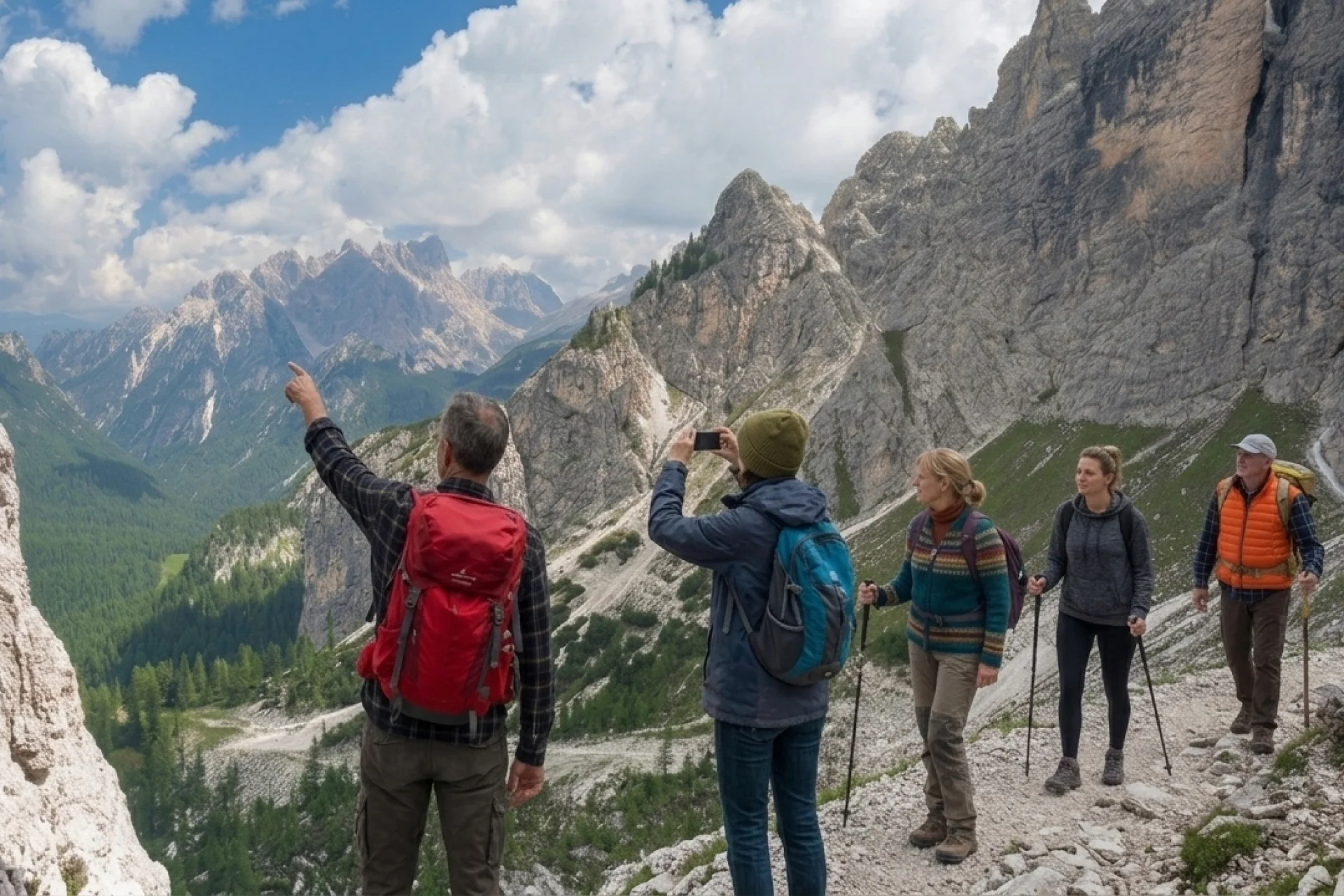
The single biggest mistake first-timers make is dressing for the valley. The weather in the Dolomites changes vertically and quickly. You might board the cable car at Faloria in 25°C humidity and step out minutes later onto a 2,123-meter ridge with 40km/h winds. That temperature shock requires a system – three specific pieces that work together.
Base Layer (Wear): Moisture-wicking synthetic or merino wool. Non-negotiable. Never, ever cotton. Cotton absorbs sweat and stays wet, turning into a cold compress against your skin the moment you stop moving. A lightweight merino tee is my personal preference – it regulates temperature, resists odor after long days, and doesn’t feel clammy when you’re pushing uphill.
Mid Layer (Carry in Pack): This is your insulation layer. A lightweight fleece or packable down jacket earns its weight on 7am starts and exposed rifugio decks. Even in August, sitting still at a 2,500-meter rifugio during lunch can be cold enough that you’ll be reaching for this within minutes.
While you’re packing your mid-layer, add a beanie (woolly hat) or a buff, great for warmth, and the buff can also serve as sun protection.
Outer Layer (Always in Pack, Top of the Pack): A high-quality waterproof shell. Not water-resistant – waterproof. The Dolomites are notorious for afternoon thunderstorms that build rapidly between 1:00 and 3:00pm. Your shell is also your primary windbreak on exposed traverses. If it doesn’t have a hood and proper taped seams, it’s going to let you down.
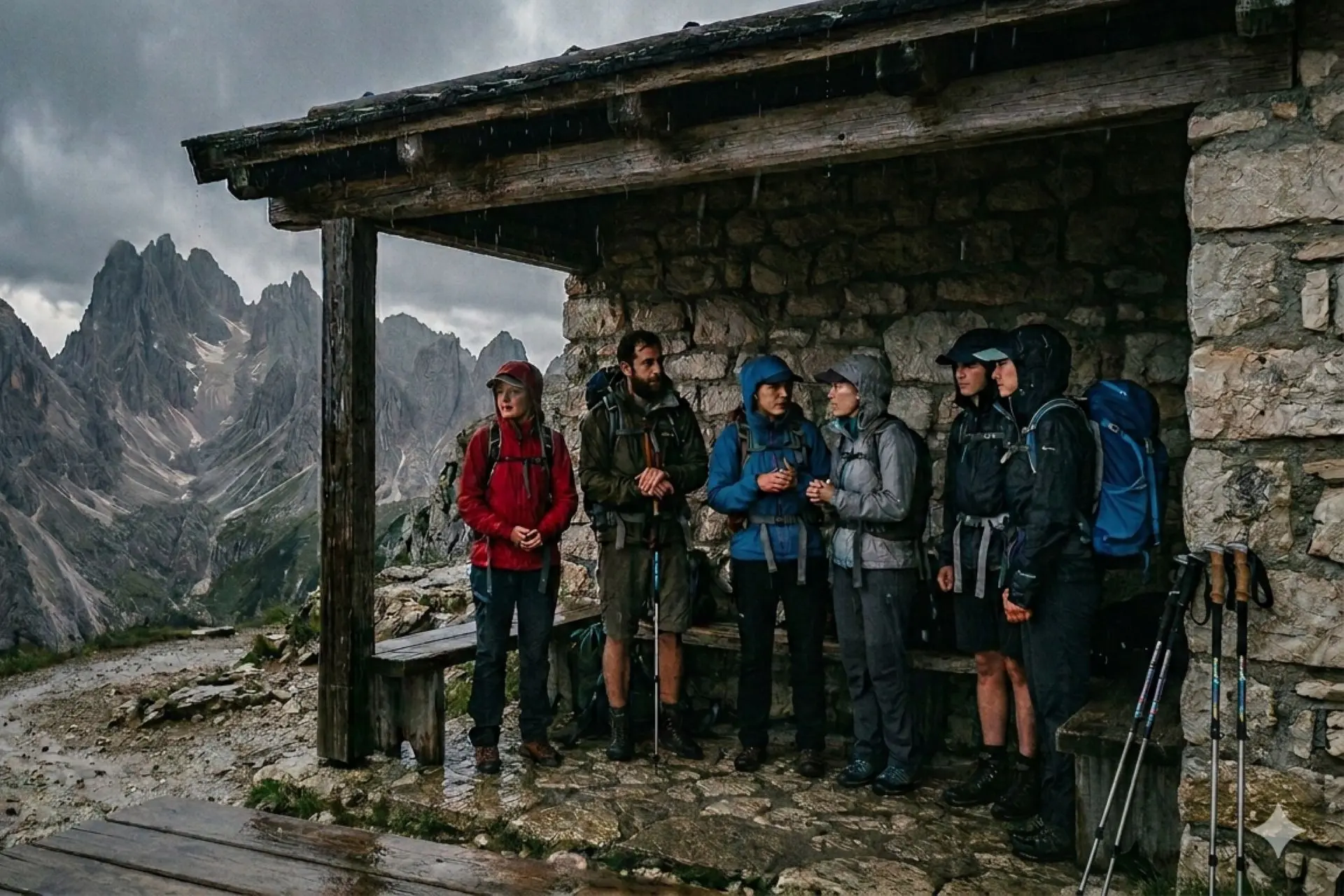
One thing that catches people out: your shell keeps you dry, but your pack is sitting in the same storm with zero protection. A lightweight pack rain cover, most weigh under 100g and stuff into their own small pocket, is worth keeping one in your pack. Or choose a pack with an integrated cover. The cover costs almost nothing, weighs almost nothing, and the one time you need it, you’ll be very glad it’s there.
For eastern Dolomites routes around Cortina, ARPA Veneto’s mountain forecast publishes daily alpine bulletins; for central Dolomites and Val di Fassa, Meteotrentino is the equivalent. Either is worth checking the evening before any exposed ridge day.
The rule I follow: start slightly chilly at the trailhead. If you feel comfortable standing still at the car park, you’ll be sweating within ten minutes of climbing. A damp base layer at the start of the day is a problem that compounds – and not in a good way!
For a minimalist Dolomites trip, you need three pieces that nest. Your mid layer must fit cleanly under your shell without restricting arm movement or bunching at the shoulders. Get this all right, and you’re covered from sunny meadows to sudden squalls on the Alta Via.


Footwear: My Stance for First-Timers
I am very fussy about my shoes! Footwear is your most important safety and comfort decision for a Dolomites summer hike. I see a lot of guides hedging here with “wear whatever feels comfortable” – that advice fails the moment you’re navigating a 600-meter descent on loose limestone.
For first-time visitors bringing one pair of hiking shoes: choose lightweight hiking boots.
Here’s why. Dolomite terrain regularly involves ghiaione (loose scree fields) and wet, slanted rock slabs. High-top boots provide the lateral ankle stability you need when your foot slides on marble-sized stones – which it will, especially during long descents when leg fatigue is already affecting your movement. A rolled ankle at hour six on a remote ridge is a bad day. A rolled ankle in trail runners at hour six on a remote ridge is a worse day!
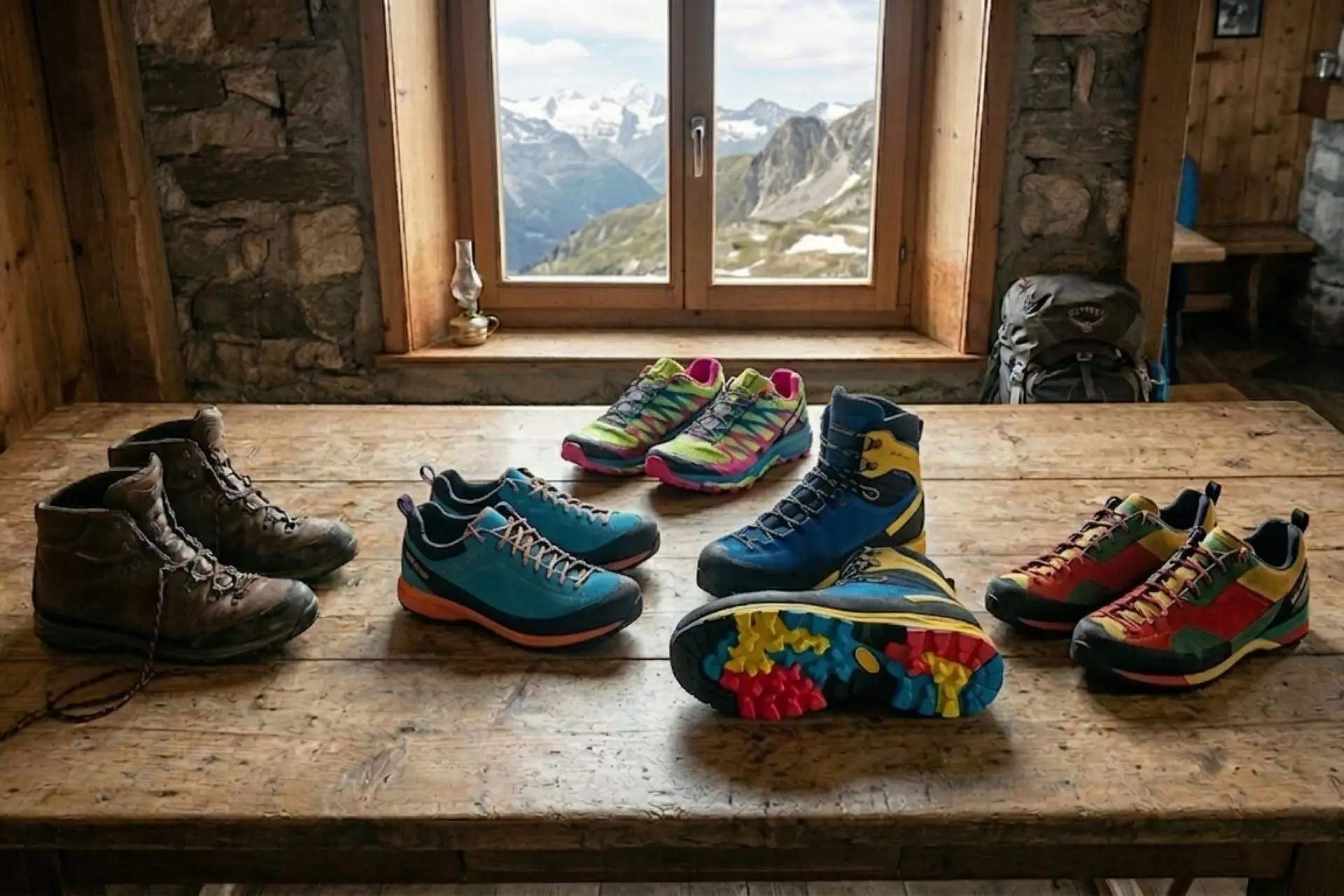
Use this framework:
- Choose boots for: Rocky descents over 400 meters, loose scree sections, any wet forecast, or if you’re carrying a heavy pack
- Choose trail runners for: Dry forecasts, well-graded meadow paths, and only if your ankles are already conditioned from regular mountain hiking
- Choose approach shoes or boots for: Technical hiking and regular scrambles or via ferrata sections where precise footwork matters
One practical point: whatever you choose, break them in before you arrive. At least 20 kilometers of trail time. The Dolomites are not the right place to discover that your new boots have a pressure point on the outer heel. For a broader look at what to pack beyond footwear, the day hiker’s rucksack guide covers every item worth carrying – and several that aren’t.
Travel Tip: Hiking poles aren’t clothing, but they belong in this section because they’re the most underrated piece of kit for knee health on Dolomites descents. Poles distribute the impact, improve stability on wet limestone slabs, and make life easier on steeper ground.
Socks: The Layer Nobody Talks About
Your socks are the interface between your skin and your boots, and on a long trek, that relationship matters. Generally, thick merino wool socks are the right call: they help cushion the impact on hard limestone descents, regulate temperature, and resist odor better than other materials.
For something slightly lighter but still substantial, I personally prefer Smartwool socks, a merino wool blend. They are just the right thickness for comfort, manage the temperature well in the cold without being too hot on those sunny days.
Obviously, socks and in particular are a personal preference, but avoid cotton and cheap synthetic blends and ultra-thin dress socks.
Gaiters and Microspikes: Optional, But Worth Knowing About
Low gaiters are optional for most summer hiking, but worth having if your route crosses ghiaione, muddy sections, or you’re out in early June when lingering snow patches are still common. Stones, mud, and wet snow all find their way into boot collars. A lightweight pair solves it and takes up almost no space. I personally don’t bother with these.
Microspikes are only relevant for early June or late September hiking, when north-facing slopes above 2,000 meters can be icy well into the morning. They slip on in under a minute and make a meaningful difference on frozen crust. Not crampons, don’t confuse the two, but they can be solid insurance for shoulder-season routes.
Hiking Pants vs. Shorts: The Honest Answer
Both work. But not on the same days, and not without thinking about the specific terrain.
Shorts feel great in July & August heat, but the Dolomites have a few hazards that shift the calculation: loose limestone that can scrape exposed legs on a stumble, ridge winds that feel cold long before you’ve noticed them building, and at lower elevations through meadow sections – ticks. The Italian National Health Institute’s tick awareness guidance is worth a quick read before hiking through grassy low-altitude sections in early summer. I’ve met hikers who wore shorts through low-lying forested or meadow sections and regretted it.
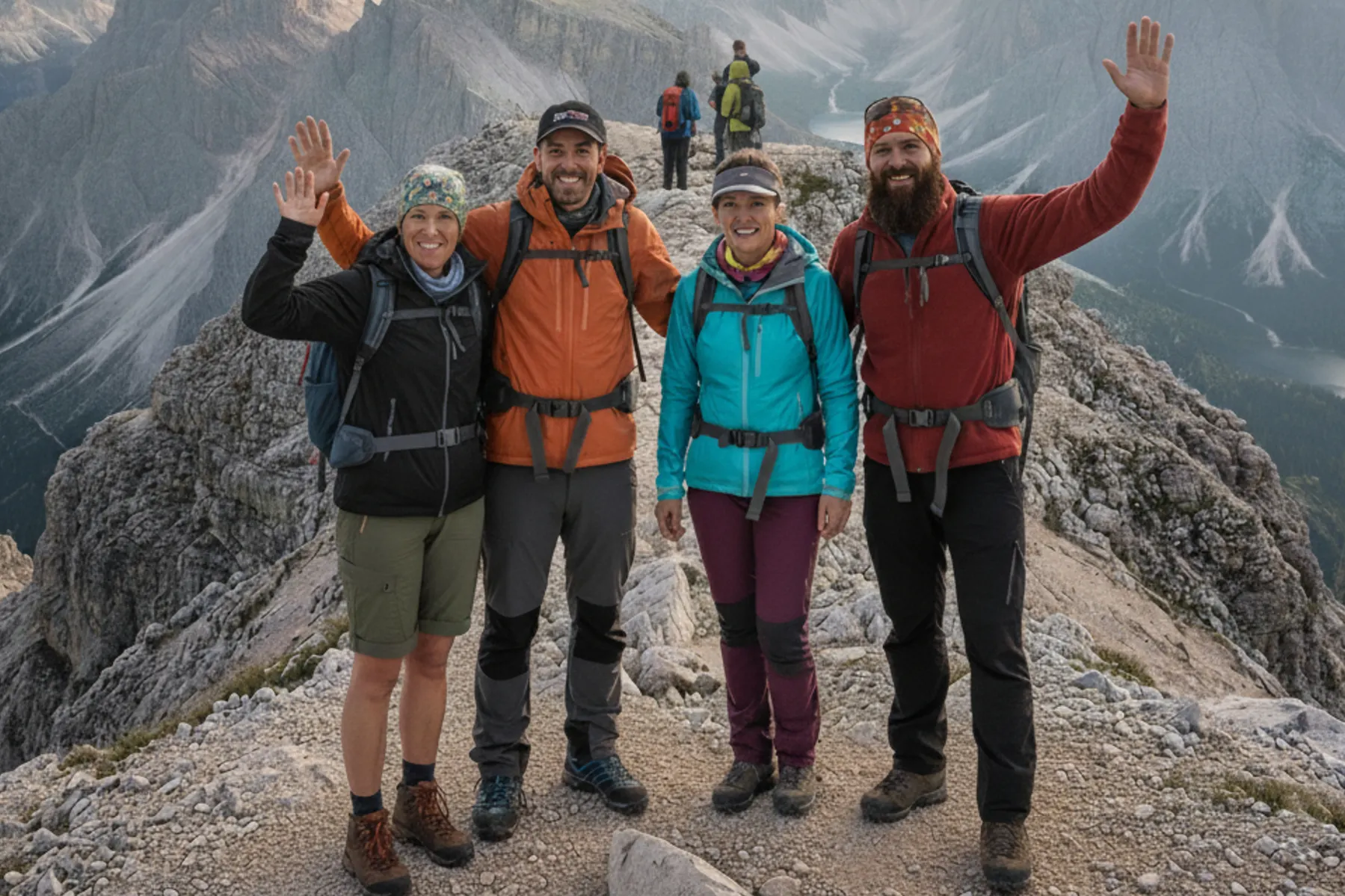
Hiking pants win for most days. They protect against scrapes on rocky descents, cut the bite of ridge wind, and minimize the risk of tick-prone grass at lower elevations without issue.
Shorts work well on hot, dry days spent above the treeline on well-maintained paths. That said, UV radiation at 2,500 meters is significantly stronger than at sea level. If you’re in shorts, you need to be disciplined about reapplying high-SPF sunscreen every two hours.
My practical recommendation for a single-suitcase Italy trip: pack one pair of hiking pants, and some zip-off trousers or lightweight technical pants that roll and vent well. They do double duty. If you think you can’t go without shorts, throw in a pair; they don’t take up much room.
Travel Tip: One versatile pair of technical pants takes up less space than two pairs of shorts and is genuinely more useful across varying mountain conditions.


UV Protection and the Afternoon Storm Window
Here’s the weather reality that most first-timers underestimate: you can get sunburned and rained on in the same hike. At altitude, the air is cool, the breeze feels fresh, and UV radiation is hitting your skin roughly 25–30% harder than at sea level. The pale Dolomite limestone reflects it back at you from below. Physical coverage is your best defense.
Essentials for high-altitude sun exposure:
- Wide-brimmed hat or technical hiking cap
- UPF-rated long sleeves (or a lightweight buff for neck coverage)
- Polarized sunglasses – the glare off white limestone is intense and persistent
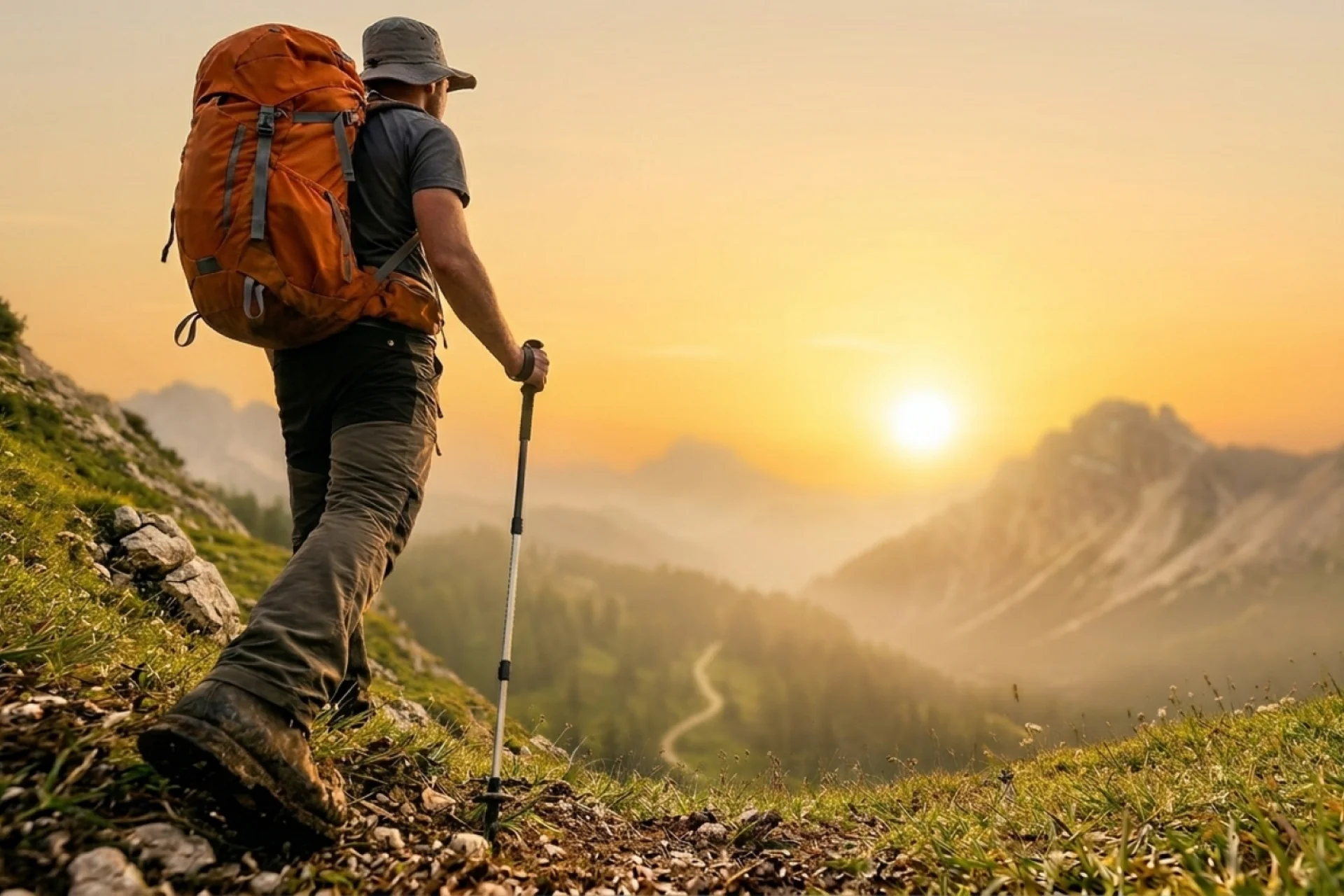
Now, the storm window. The Dolomites follow a reliable summer pattern: clear mornings, afternoon thunderstorms building from around 1:00pm, often breaking by 3:00pm. I plan every route around this. Being trail-ready by 7:00 or 8:00am and aiming to get off exposed sections before the thunderheads build. It also means you hit the best light for photos.
Manage your layers around this rhythm:
- Keep your waterproof shell at the very top of your pack – not buried under your lunch
- Keep your mid-layer within easy reach for the temperature drop that follows rain
- If you hear thunder, don’t push for the summit photo. Shelter at the nearest rifugio until it passes
This isn’t overcaution. Lightning on an exposed Dolomite ridge is genuinely dangerous.

The Hard No List: What to Leave in the Valley
A few things I see sometimes on the trails that I’d encourage you to reconsider before you pack them:
Denim: Heavy, restrictive, and slow-drying. If a storm catches you in jeans, you’ll be cold, chafed, and miserable for the rest of the day. Leave them for Cortina’s evening passeggiata.
Cotton anything: Holds sweat, loses insulation when wet, dries slowly. A cotton t-shirt in a mountain rainstorm becomes a problem within minutes.
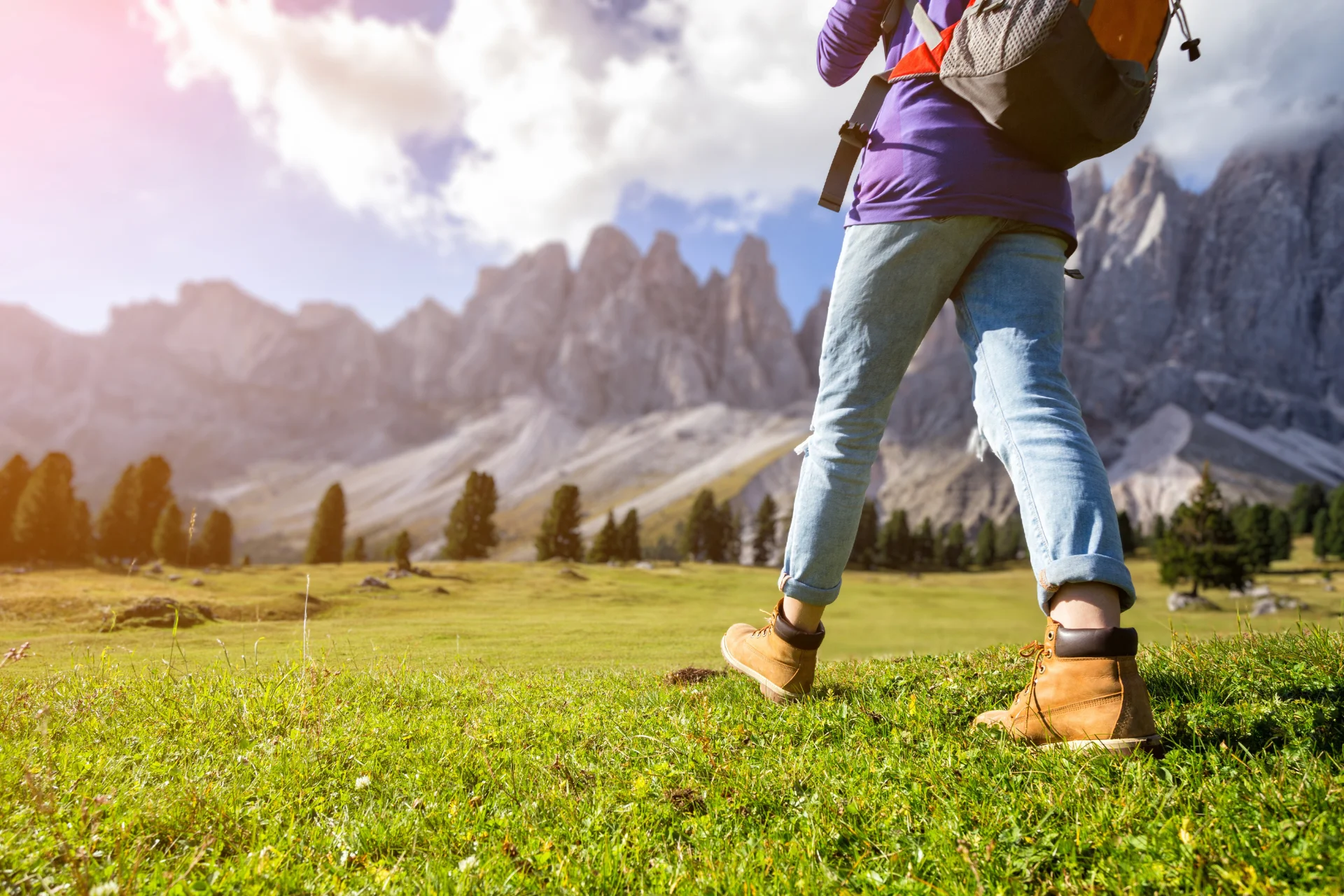
Fashion sneakers or casual trainers: Flat soles offer no traction on loose limestone. No lug depth means sliding on steep dirt. No lateral support means your ankles are exposed. I’ve watched people in trainers struggle on paths that are rated as straightforward hikes – not because the hike was hard, but because their footwear made every surface awkward.
Brand-new boots: Blisters don’t care that you booked three months in advance. Don’t let a Dolomites trail be the first serious test for new footwear. When blisters happen despite your best preparation, and they will at some point – knowing how to treat them on the trail makes the difference between a minor inconvenience and a ruined day.
Swap these out for a quick-dry synthetic or merino top, technical hiking trousers or leggings, and broken-in footwear. The difference in enjoyment and safety is significant. If you’re unsure whether your current fitness and kit level is ready for the Dolomites terrain, the beginner’s hiking guide has an honest assessment of what to expect on your first trek here.
Hut Culture: From Trail to Rifugio Table Without Overpacking
After a day on the mountain, you’ll walk into a rifugio dining room for a multi-course dinner of roast pork, goulash, dumplings, or whatever the house is cooking. The atmosphere is casual and communal – but “casual mountain” has its own standards, and showing up clean and dry is part of it.
The primary rule of hut life: boots off at the door. Every rifugio has a boot room, and muddy boots stay there! Bring lightweight sandals or slides to wear inside. I always pack a pair of flip-flops to give my feet a break after a full day in boots, and they weigh almost nothing.
Evening wear at a rifugio is simply a cleaner version of your hiking kit:
- A light fleece or wool sweater
- A fresh merino base layer or simple tee
- Leggings or technical hiking pants
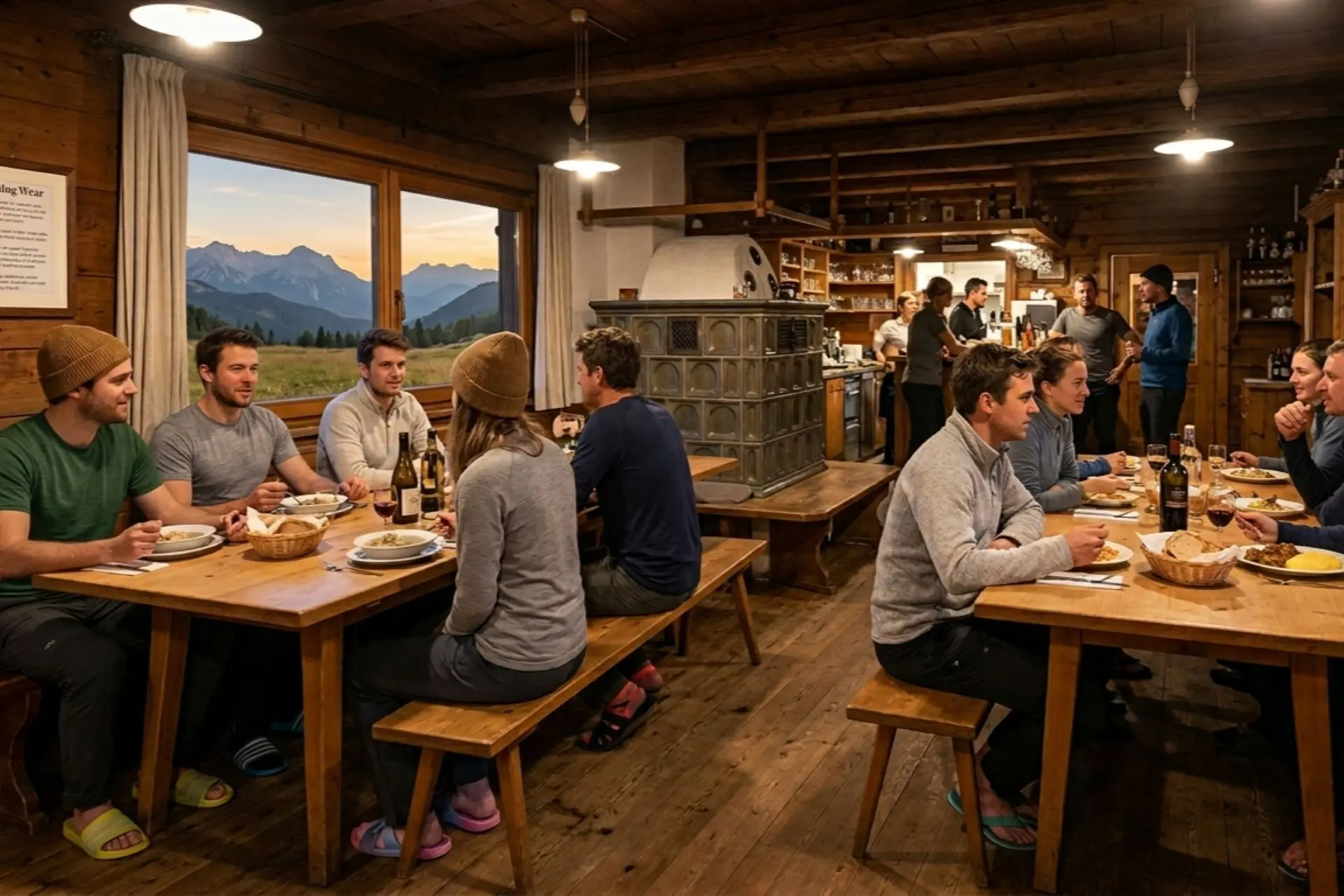
Merino is ideal for back-to-back hut nights because it is lightweight, resists odor, and dries quickly after a sink wash, which is exactly the kind of washing facility you’ll have access to. One fresh merino tee and a pair of tapered technical pants transition from a ridge summit to a rifugio dinner table without looking out of place.
This isn’t just about aesthetics. It’s a practical approach that keeps your pack genuinely light. For a deeper look at what to expect inside the huts, room types, booking windows, and meal costs, our complete rifugio guide covers it all.


Activity-Matched Clothing: A Practical Framework
Don’t pack for every possible scenario; pack for your actual itinerary. Here’s how I match clothing decisions to specific objectives:
By Activity Type
Easy Rifugio Stroll (lift-assisted, wide paths): Breathable base layer, light wind layer, grippy casual shoes acceptable on maintained paths. High-factor sun protection is still essential at altitude, don’t skip it because the walk feels easy.
Half-Day Trail Hike (moderate, 3–5 hours): Full three-layer system, sturdy boots or solid trail runners with aggressive grip on dry terrain. Waterproof shell accessible at the top of your pack.
Full-Day Summit or Traverse Hike: Three-layer system plus a warmer mid-layer. Long pants and durable boots for high-altitude exposure and rocky descents. Bring more water than you think you need; the cool air masks how much you’re sweating.
Via Ferrata Day: Close-fitting layers that won’t snag on metal hardware. Technical gloves. Solid footwear with a precise sole for gripping rock and iron rungs. For more technical climbs, approach shoes are worth it here over standard hiking boots (if you’re planning on doing more via ferrata). Don’t go out and buy a pair just for you first ferrata – make sure you love it first.
By Month
Early June: Colder mornings, snow patches still present on north-facing slopes above 2,200 meters. Warmer mid-layer, waterproof boots rather than trail runners, and be conservative with your route choices until you’ve assessed actual conditions.
July and August: Peak heat in the valley, afternoon storms are more frequent and intense. Lighter base layer, but your shell stays in your pack every single day… not in the car, not back at the hotel!
The One-Suitcase Kit: What Actually Fits
You have 2 options: keep and carry your hiking kit and backpack separately. Or, everything below fits into a third of the suitcase you’re already bringing for Rome – and most of it is compact enough that you won’t notice it’s there until you need it.
The full hiking clothing kit:
- Base layer tee (x2)
- Lightweight fleece or packable down jacket
- Waterproof hooded shell
- Technical hiking pants or zip-offs (x1 pair)
- Lightweight hiking shorts (x1, optional — they pack flat)
- Merino wool hiking socks (x3 pairs)
- Lightweight hiking boots
- Beanie and/or buff
- Polarized sunglasses and a cap
- Lightweight flip-flops or slides for rifugio evenings
- Pack rain cover
Optional extras by trip type:
- Low gaiters
- Microspikes
- Collapsible trekking poles
The boots are the only item that takes real space; wear them on travel days or pack them sole-to-sole at the bottom of your case. Everything else compresses. The fleece rolls tight. The flip-flops slide into any gap. The rest is just clothing. Most of it crosses over well enough that they are perfectly functional for part of your time in Rome anyway.
Self-Guided ToursSee You on the Trail
Getting your kit right for the Dolomites isn’t about spending a lot — it’s about choosing the right pieces, understanding which materials to wear and when, and not discovering your boots need breaking in on day one of a seven-day route.
Pack the three-layer system, leave the heavy clothes, and check the forecast the night before. Most other things you can figure out on the trail. If you’re still unsure where to start with planning your hike, the Dolomites hiking guide is the right next step.

View Posts By Topic
FAQ
Yes, and I’d go further – it’s the single most important item in your pack. Afternoon storms are a consistent pattern here in summer, not occasional bad luck. A packable, hooded, genuinely waterproof shell (not water-resistant) also functions as your primary windbreak on exposed ridges where temperatures drop fast. Never leave the trailhead without it.
Lightweight hiking boots. For loose scree, wet rock slabs, and steep descents, ankle stability is more valuable than the speed advantage of trail runners. Trail runners work well for experienced mountain hikers on dry, well-graded paths. If you’re new to this terrain, the boot is the safer choice.
June means colder mornings, a warmer mid-layer requirement, and the real possibility of snow patches on north-facing slopes above 2,000 meters; waterproof boots earn their keep.
August allows lighter base layers and shorts during the heat of the day, but the afternoon storm frequency actually increases mid-summer. A waterproof shell is non-negotiable in both months.
Clean and simple – most wear mountain or active wear. The atmosphere is casual mountain, not formal. The one rule that matters: boots come off at the door. Bring lightweight slippers, sandals, or slides to wear inside the hut. Don’t bother packing anything “city smart,” it’ll just take up space you need for hiking layers.
Yes, if you’re using merino wool. A quality merino base layer can handle two or three consecutive days of hiking without becoming offensive; it genuinely resists odor in a way that synthetic fabrics don’t match.
A quick sink wash at a rifugio, and it dries overnight. This is the main reason I’d push merino over any other base layer material for multi-day trips.