
Here’s something we hear regularly from hikers planning their first Dolomites trip: “Do we really need to rent a car?” It’s an understandable question. The mountains look vast on a map, the valleys radiate in every direction, and the trailheads seem impossibly scattered – and they are!
But the honest answer? No – you don’t need a car to hike the Dolomites. The Dolomites public transport systems work well. It just asks more of you than most visitors expect. So, what you really need is a clear understanding of how transit works across the different provinces, which seasonal windows matter, and where the gaps are before they catch you off guard.
We’re based here and live these logistics year-round, planning routes, catching public transport, and watching where things go wrong for independent travellers who didn’t know what to check in advance.
There are nine things worth understanding before you plan a car-free Dolomites trip. Here’s all of them.
Choose Your Region Based on Transit Reliability
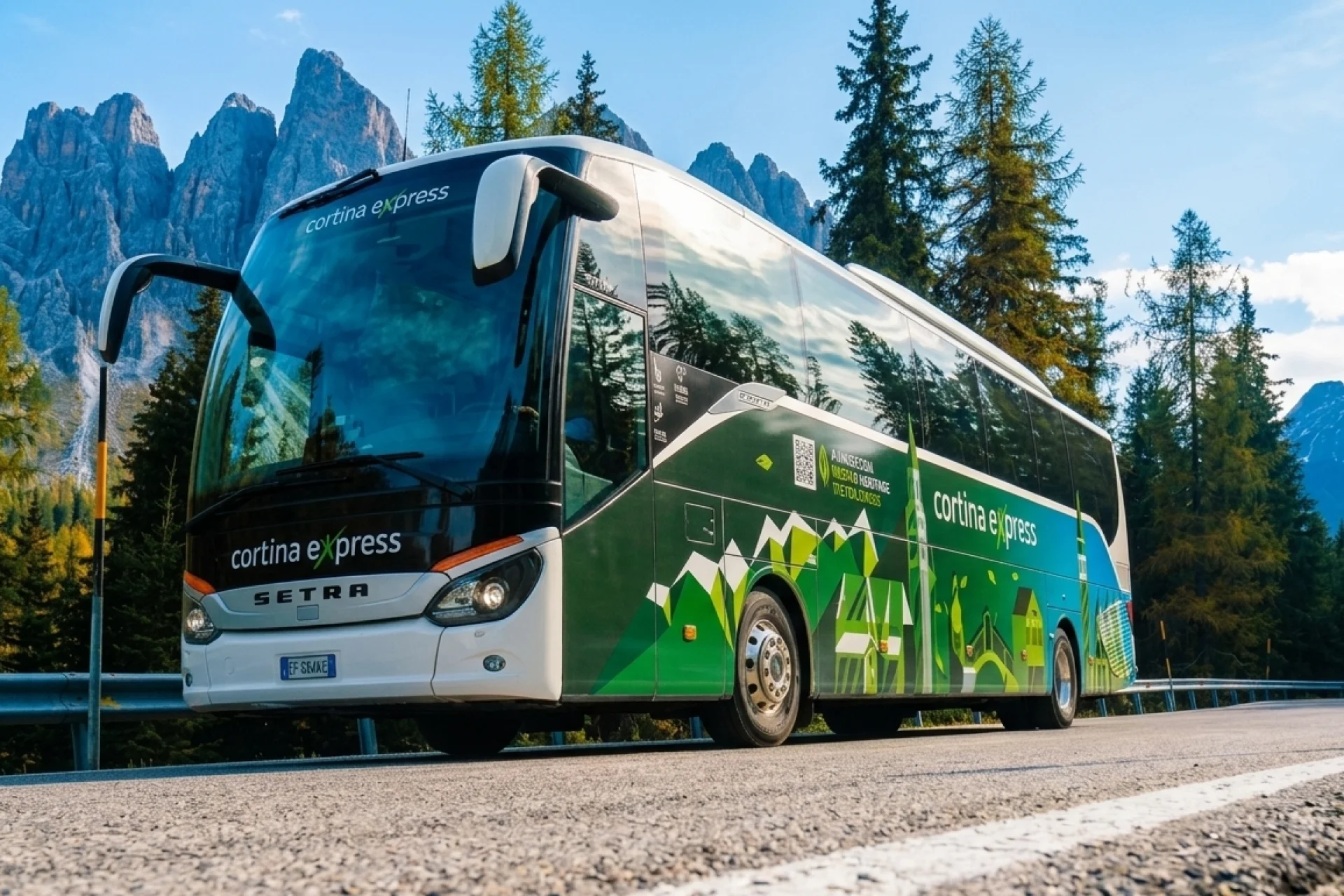
Not all parts of the Dolomites are equally connected. While both provinces are leaders in Italian public transport, South Tyrol (Alto Adige) is widely considered the gold standard for car-free travel in the Alps. When planning a car-free trip, it helps to think in two distinct modes:
South Tyrol (Easy Mode): Frequent, punctual buses, an integrated English-friendly journey planner, and good lift-to-trail connectivity. If this is your first car-free Dolomites trip, South Tyrol is where you want to be.
Belluno and Trentino (Harder Mode): Fewer connections, seasonal gaps, and less logistical clarity. Both regions have trails that are genuinely worth your time and effort. Trentino, in particular, has some quieter valleys that most visitors miss entirely. If it’s your first car-free trip or you’re working for a week or less, investigate South Tyrol first. When you’re ready to venture further, the Trentino Trasporti planner is your starting point, though considerably less intuitive than Südtirolmobil.
For a broader look at the regions and trails worth building your itinerary around, the Ultimate Guide to Hiking in the Dolomites is a useful starting point.
Plan Your Trip with Seasonal Transport Windows
Timing matters enormously here. Visiting when lift networks and shuttles are closed means many trailheads simply aren’t accessible without a vehicle.
Peak season (late June to mid-September): Maximum frequency across all bus and lift networks. The most car-free-friendly window.
Early season (May to early June): Valley buses operate, but most high-altitude lifts and dedicated shuttles are still closed.
Late season (late September to October): Services taper noticeably. Earlier last-bus times make missed connections more likely.
Travel Tip: In shoulder season, base yourself in Ortisei, Bolzano, or San Candido and focus on valley-start routes. Re-verify timetables seven to fourteen days before arrival. Schedules shift from year to year.
Select a Strategic Base Town
Think of your base town the way you’d think about a trailhead. The better positioned it is, the less friction you’ll face every morning. These four hubs offer the most reliable car-free logistics:
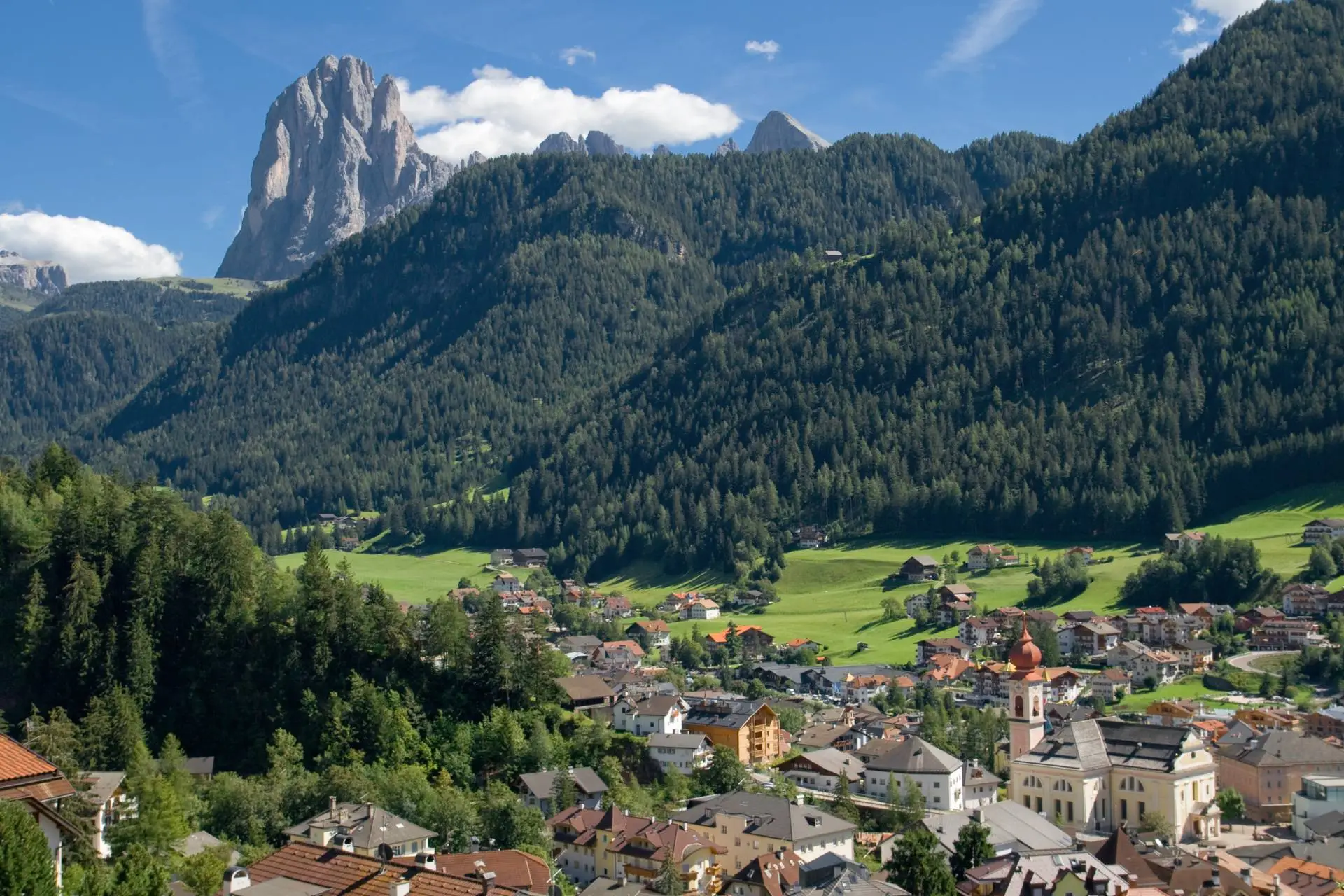
Val Gardena (Ortisei/Selva): The strongest car-free hub in the Dolomites. High lift density, frequent bus connections, and direct access to the Seceda ridge and Alpe di Siusi plateau.
Bolzano: Best for train connections and budget-conscious itineraries. A solid staging point before heading deeper into the mountains.
San Candido (Innichen): Ideal for Tre Cime di Lavaredo and Lago di Braies access via the Pustertal/Val Pusteria train line.
Cortina d’Ampezzo: Reaches the eastern Dolomites icons but requires more careful bus schedule management.
If you are basing yourself in a valley town, for trips over four nights, consider splitting your stay between two bases. It reduces daily transit friction significantly and lets you cover more ground without the same morning commute each day.
Navigate the Network Split: Südtirolmobil vs. Dolomiti Bus
This is the piece most visitors don’t realise: there’s no single “Dolomites bus system.” You’re stitching together two separate provincial networks.
Südtirolmobil covers South Tyrol and is the most user-friendly option. The journey planner app handles real-time schedules across buses, trains, and many lifts, all in English. The official site lets you plan door-to-door connections before you leave home.
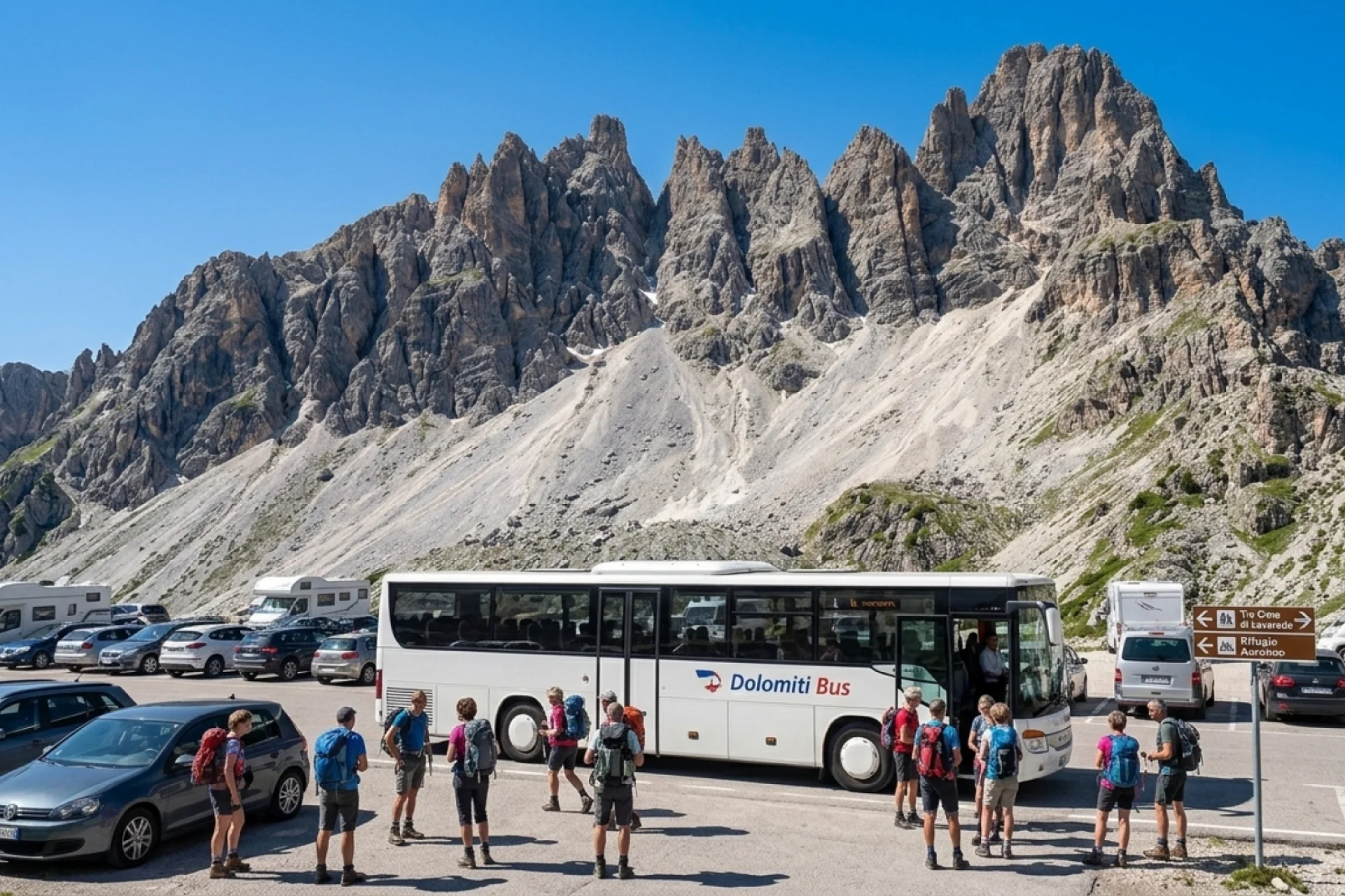
Once you cross toward Cortina, you’re in Dolomiti Bus territory. This Belluno-based network is workable but less forgiving: fewer daily runs, more seasonal gaps, and considerably fewer English-language resources. When crossing provincial boundaries, always build in time buffers and confirm last-bus times the night before.
Keep an eye on the schedules: In the Belluno region (Cortina/Misurina), schedules shift dramatically between Feriale (workdays) and Festivi (Sundays and Public Holidays). A bus that runs every hour on a Tuesday might only run twice on a Sunday. Or not at all. Always double-check the “Notes” column on the PDF timetable if your transit day falls on a weekend or a local holiday.
We fell for this ourselves in our first autumn here. Checked the timetable, confirmed the connection, felt well-prepared. Didn’t clock the small F in the Notes column until we were already at the stop. Festivo! That Sunday service ran twice, and we’d just missed the first one!
If you’re comfortable managing two separate networks, it’s entirely doable – just build in time buffers and confirm last-bus times the night before. If it sounds too risky to you, our self-guided hiking tours always include all necessary transfers or detailed public transport instructions and updated timetables.
Self-Guided ToursLeverage Local Guest Cards to Slash Transit Costs
Many visitors overpay for transport simply because they didn’t know to ask the right question at check-in. Most South Tyrol accommodations issue free guest mobility cards, including the Südtirol Guest Pass, Val Gardena Mobil Card, and various valley-specific equivalents.
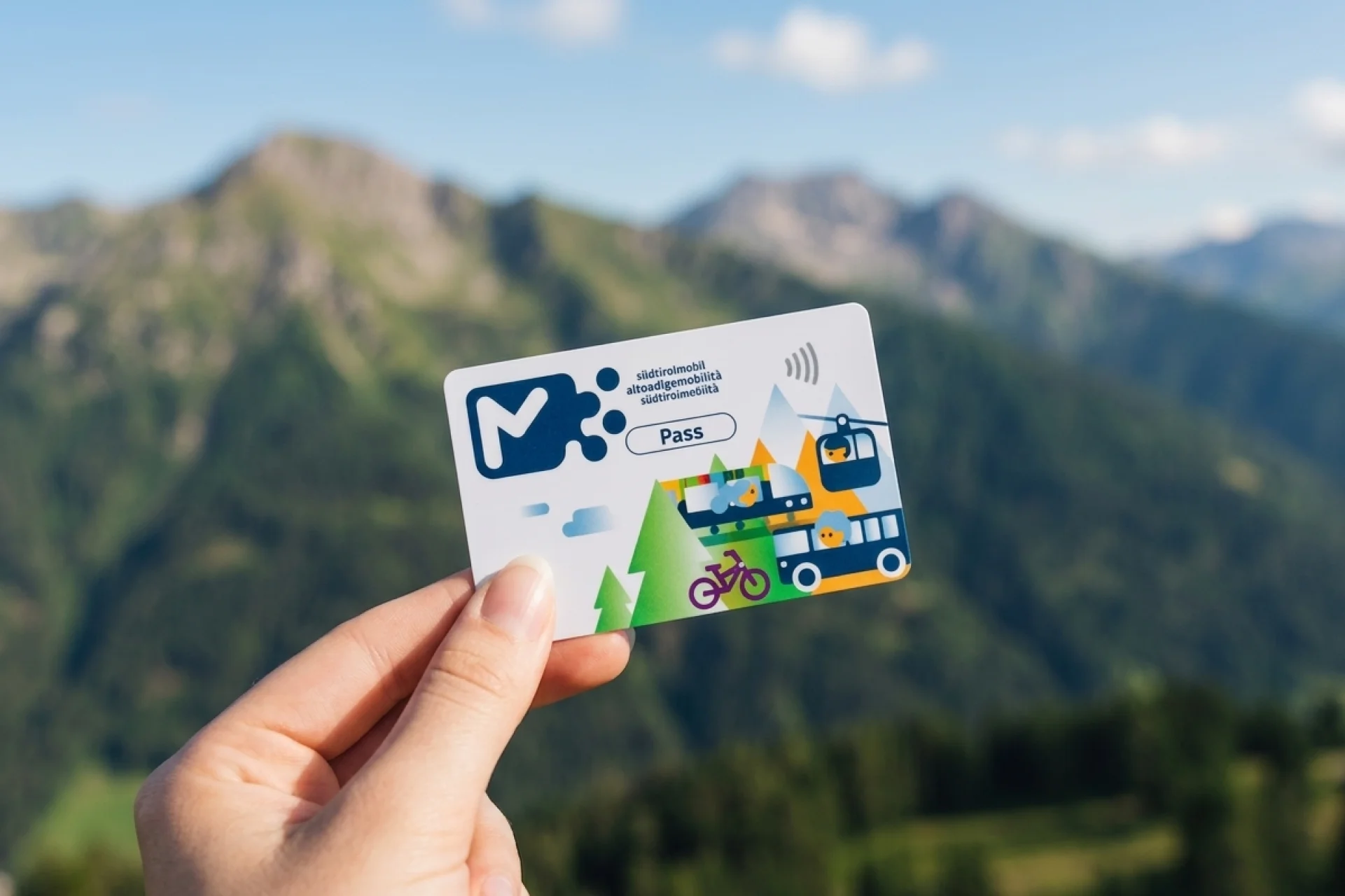
Local Insight for 2026: Most South Tyrol hosts have moved to the Digital Staypass. Instead of a physical card at the front desk, you’ll likely receive a QR code via email shortly after booking. Check your spam folder before you land at the train station. Having that code ready on your phone means potential savings even before you arrive (in the respective province).
These typically cover regional buses and trains, and “occasionally” public lifts too.
What they almost never cover: private cable cars and reservation-only shuttles like Tre Cime or Lago di Braies access services.
Ask your accommodation/host at the time of booking: “Do you issue a digital guest mobility pass, and can I get the QR code before I arrive?”
Integrate Cable Cars as High-Altitude Trailheads
In the Dolomites, cable cars aren’t scenic novelties – they’re functional infrastructure for car-free hikers. They get you to high-altitude starts efficiently, without burning the first two hours of your day climbing without the scenic reward.
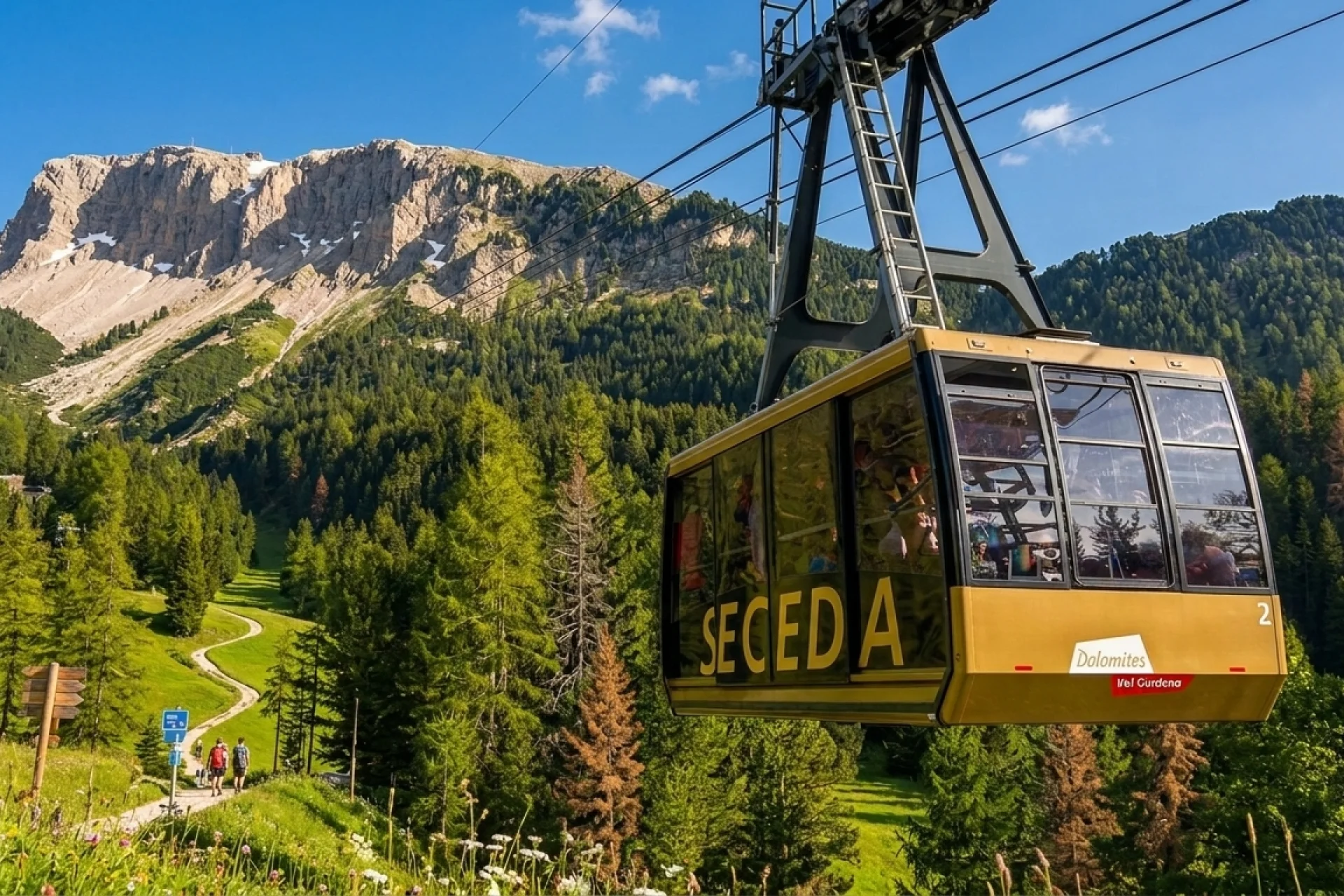
Two approaches work well:
Up-and-hike: Ascend by lift, then spend the day on ridge routes and descend by a different path or trail (or by cable car again).
One-way transit: Take a lift up, hike across to a different valley, catch the bus down. The Lagazuoi cable car above Falzarego Pass is a classic example of this – up by lift, across to Rifugio Lagazuoi, then down through the Dolomites’ famous WWI tunnels back to Falzarego Pass, where you can pick up the bus toward Cortina. Or you can hike hut-to-hut back towards Cortina.
Always check the last descent times before you start walking. Missing it can be a disaster, incurring a long, cold, and sometimes dark walk, or, if you are lucky, an unplanned taxi ride. Treat that last cable car like your last bus home!
For a deeper look at what hut-to-hut hiking in the Dolomites actually involves, the guide to Dolomite rifugios covers booking, room types, costs, and what to expect on a multi-day traverse.

High-Demand Shuttles: Book Early or Build a Backup
Two main trailheads catch car-free hikers off guard more than any others.
From Dobbiaco (South Tyrol Side)
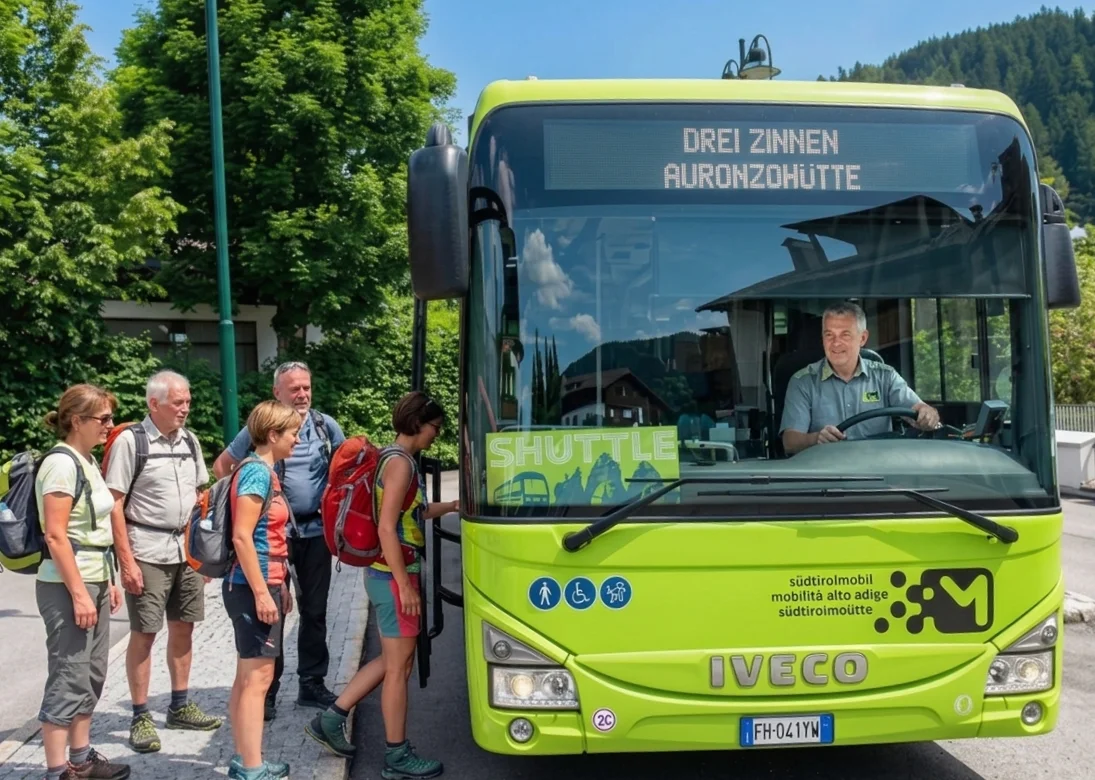
Tre Cime di Lavaredo: The access road to the Auronzo rifugio is restricted in high season. The main shuttle is line 444, which runs from Dobbiaco. It does not stop at Misurina. If you’re arriving from the Cortina side, DolomitiBus operates separate services via Misurina, but these are distinct networks, not a single joined system. Either way, seats book up across all departure windows, so don’t leave it to the week before. The Dobbiaco shuttle costs around €22 return; DolomitiBus fares from Misurina run around €4 each way. Neither is covered by guest passes.
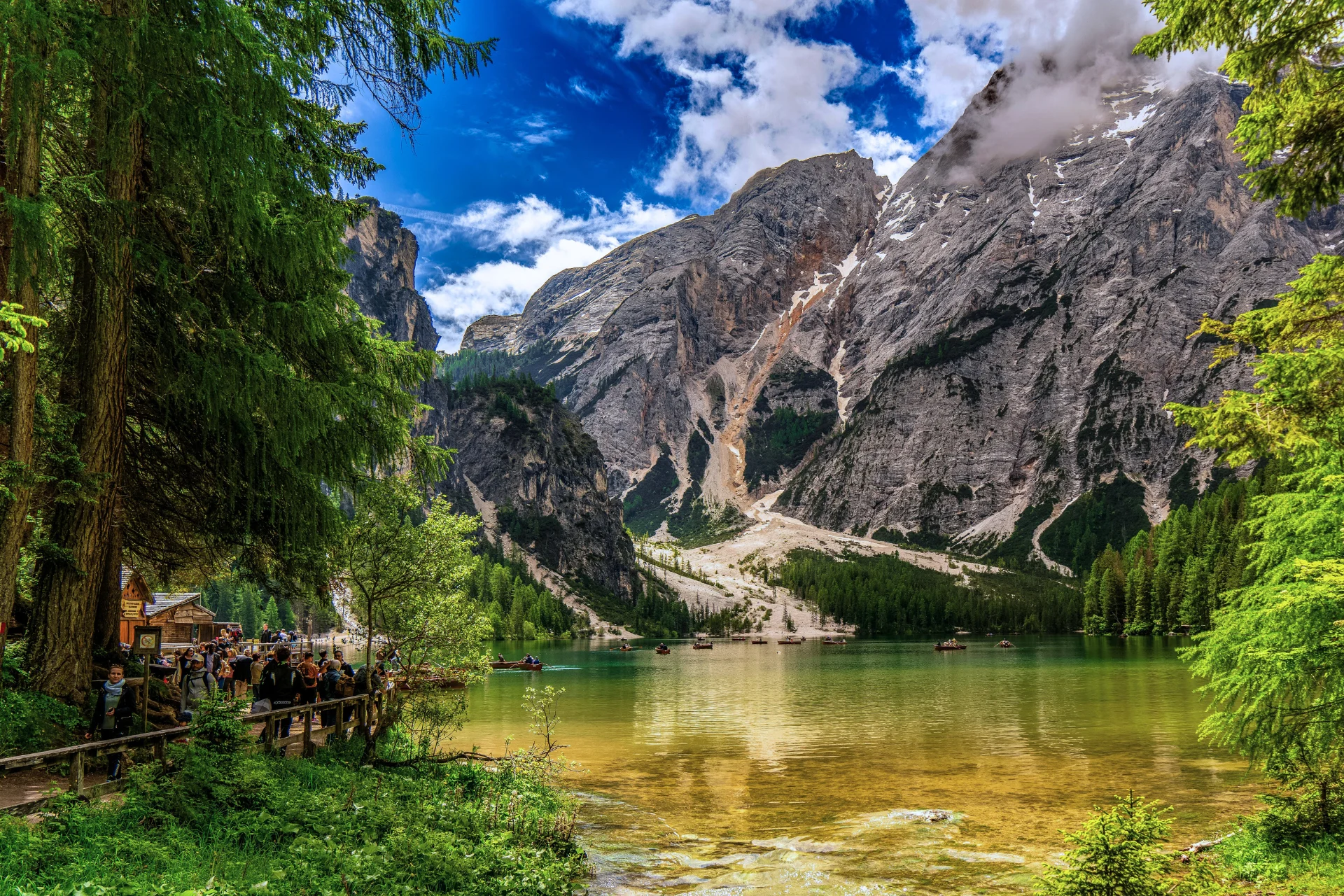
Lago di Braies: From July 10 to September 10, bus access to the lake requires advance online booking and prepayment – once routes 439 and 442 are full, that’s it. Walking and cycling in remain unrestricted. Book your bus tickets and check current access rules directly at the official Lago di Braies site when finalising your dates.
From Cortina (Veneto Side)
Tre Cime di Lavaredo: There is no direct bus from Cortina to Rifugio Auronzo. It is a two-step journey. Take DolomitiBus Line 51 from Cortina d’Ampezzo to Misurina Genzianella – services typically begin around 7:55 AM and run every two hours. From Misurina Genzianella, transfer onto DolomitiBus Line 50 to Rifugio Auronzo. During high season, this runs every 30 minutes and costs around €4 each way. Tickets can be bought on the bus via contactless card or in advance through the DolomitiBus app. The last shuttle back from Rifugio Auronzo departs around 6:00 PM — earlier than the Dobbiaco side, so time your hike accordingly.
Lago di Braies: From Cortina, you need to travel to Dobbiaco first. Take Südtirolmobil Line 445 from Cortina to Dobbiaco, around 45–50 minutes at approximately €5. From Dobbiaco, connect onto the Südtirolmobil Line 442 directly to the lake in around 30 minutes. From around July 10 to September 10, Line 442 requires mandatory advance booking and prepayment via the official Lago di Braies portal – reservations typically open in early June and sell out weeks ahead. Don’t leave it late.
If a shuttle is full:
- Keep your booking confirmation and board number handy
- Have a backup hike ready, one served by standard regional buses
- Consider a pre-booked private transfer for “must-do” trails you won’t compromise on
The Tre Cime loop itself is worth every logistical effort, by the way. Our Tre Cime di Lavaredo hiking article covers the trail in detail, including the best time of day to start for those iconic views while trying to avoid the midday crowds.
Use Private Transfers Strategically, Not as a Last Resort
Reframe how you think about private transfers. They’re not a planning failure – they’re a precision tool.
A pre-booked driver solves specific problems that buses simply can’t:
- Early starts before the first regional service runs
- Access to trailheads before public access gates close
- Cross-valley legs where no direct bus connection exists
- Shoulder season trailheads where public shuttles have already closed for the year
Book through your hotel or the local tourist office (ATP). Agree on the pickup location, time, and fare in advance. Rural Dolomite roads after dusk are isolated. You don’t want to be working out logistics roadside at 8pm with limited phone reception.
Our self-guided hiking tour packages include these transfers as standard on legs where necessary. It’s one of the details that makes the difference between a frustrating day and a clean one.
Sort Your Luggage Strategy Before You Arrive
Car-free hiking is seamless until you’re wrestling a 23kg backpack onto a packed mountain bus. A bit of planning here saves a disproportionate amount of stress.
- If you are doing a linear multi-day hike, you will need to arrange a luggage transfer to your final hotel
- If doing hut-to-hut, decide what you can carry between huts and what you must arrange to be stored, and where
- Confirm early check-in of luggage or luggage storage with hotels before you arrive
- Pack a bag you can lift independently up the bus steps without blocking the aisle
Planning your packing alongside your transport? The hiker’s packing list for the Dolomites covers exactly what to carry for trails across the region, including which items earn their weight and which ones don’t.
 Self-Guided Tours
Wrap Up
If you’ve read this far, you have a realistic picture of what car-free logistics in the Dolomites actually involves, and you can make an honest call about how much of it you want to manage yourself. Some hikers find the puzzle satisfying. Others reach the Tre Cime shuttle section and decide they’d rather hand that layer to someone who does it daily.
If that’s you, take a look at our self-guided hiking tours – they’re built specifically for independent travellers who want the freedom of the trail without the logistical friction of stitching it together from scratch.
View Posts By Topic
FAQ
It’s genuinely feasible. Not just a theoretical yes. In South Tyrol, especially, the infrastructure is built for it. Val Gardena, San Candido, and Bolzano function as proper car-free bases with lift and bus connections that reach most of the region’s iconic trailheads.
The caveat is shoulder season: outside late June to mid-September, some high-altitude access closes, and you’ll need to adjust your route planning accordingly. With the right base town and a bit of schedule research, the majority of the Dolomites is reachable.
Südtirolmobil for everything in South Tyrol. It’s genuinely excellent and handles real-time schedules. For Cortina and the Belluno side, check the Dolomiti Bus website directly. Re-verify your specific connections the evening before your hike.
No. Most guest passes cover regional buses and trains within their issuing province. Private cable cars, chairlifts, and reservation-only shuttles like Lago di Braies and Tre Cime services are almost always excluded. Confirm the exact inclusions with your accommodation when you book.
Save a local taxi number before you leave each morning. Always aim for the second-to-last departure rather than cutting it close on the final one. And build a shorter backup loop into your day plan for trailheads where the last bus is early.
For most people, yes, particularly if you’re visiting in shoulder season or planning to cross provincial boundaries. Managing two separate bus networks, shuttle bookings, guest card exclusions, and luggage transfers across multiple bases is genuinely complex.
A self-guided tour handles the logistics layer (transfers, rifugio bookings, route notes) while you retain full control of your pace on the trail. Read through our self-guided hiking guide for a detailed breakdown of what’s included and what that experience looks like in practice.
As early as possible. Ideally, four to six weeks ahead for July and August dates. Both fill quickly, and neither accepts guest passes. If your dates are flexible, weekday mornings in late June or early September offer significantly more availability than August weekends.